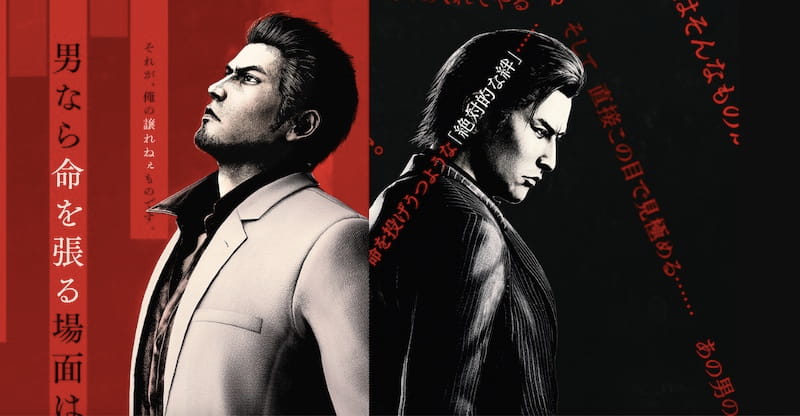
Yakuza Kiwami 3 & Dark Ties PS5 Review. The original Yakuza 3 was something of a transitional point for the franchise. Released in 2009 in Japan, it was the first mainline Yakuza game on the PS3 (the first was technically spinoff Yakuza Kenzan!), and as such suffered from some teething issues on the new hardware. That’s not to say it’s a bad game, as it’s not; the Okinawa setting was a refreshing change of pace from the bustling streets of Kamurocho, and the fact Kazuma Kiryu is now running an orphanage added a new dimension and warmth to his character. Still, its combat was a bit iffy and enemies proved notorious block sponges, leading to some frustrating rucks.
With Yakuza Kiwami 3 however, developer Ryu Ga Gotoku Studio has polished over the cracks and added a wealth of new content – some more successful than others, I might add – while giving the Dragon Engine facelift you’ve come to expect from the franchise at this point. Then there’s Dark Ties, a whole new sub-story highlighting Yoshitaka Mine’s exploits prior to the main narrative. The result in many ways depends on your familiarity with the original version, but there’s a lot to like here.
Yakuza Kiwami 3 & Dark Ties PS5 Review
Who’s The Daddy?
Yakuza 3’s narrative was always one of the better – and dare I say it – simpler stories to follow in the saga. Sure, there’s the usual manner of twists, turns and conspiracies that punctuate the story, but at its heart, it’s about Kiryu-san – now operating the Morning Gory orphanage alongside Haruka in Okinawa – protecting those dear to him. It also benefits from not being as convoluted as something like Yakuza 4 or 5, as you aren’t following multiple playable characters’ stories.
As with the PS3 original, Morning Glory comes under threat from multiple parties as the land it rests on is the ideal spot for lucrative building plans; in the midst of all this, the Sixth Chairman of the Tojo Clan, Daigo Dojima is shot, opening up compelling narrative thread that also takes you back to the neon-soaked streets of Kamurocho. The story still remains as interesting as it was first time around, and the additional cutscenes – which I won’t spoil – really help flesh things out. Pleasingly, it still retains the same loveable idiosyncrasies we’ve come to know and expect from RGG Studio.
Morning Glory is the beating heart of Yakuza Kiwami 3, as it’s been fleshed out into its own, cosy-like management sim. Whereas in the original you would chat to the kids and only skim the surface of what it takes to run the place, players are now able to take part in a bevy of tasks.
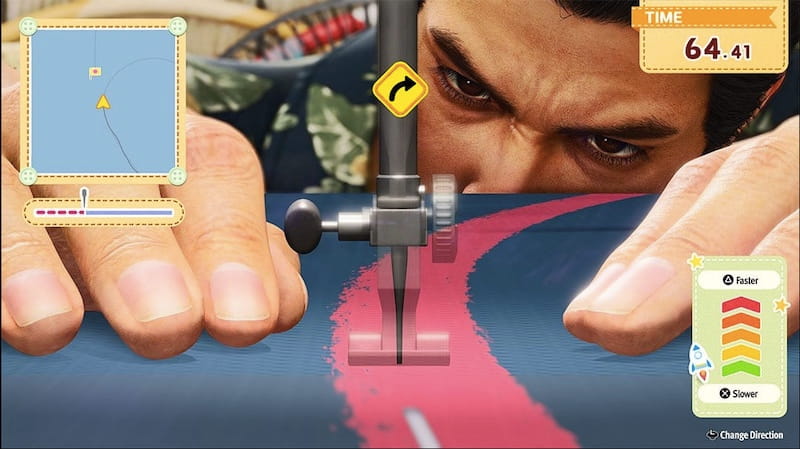
The hilariously-awesome Daddy Rank is a new feature that increases by having Kiryu perform various tasks in the orphanage. Most of these are linked to amusing mini-games – helping kids with the homework across various subjects, cooking dishes, sewing, catching insects – as well as bonding with the children by chatting and taking part in their own little quests. It’s charming stuff, and feels good as you can see your actions actually matter. Plus, hearing Kiryu proclaim, “Like A Dragon…of sewing!” never gets old.
That’s not all. There’s whole garden to tend to where you can grow cops, raise animals and trade items with local merchants to increase your standing with them. You can literally lose hours planting spuds, carrots, onions, tomatoes, adding fertiliser to expedite the process and expanding to new soils. Selling items feeds your orphanage fund, traders will exchange goods for meat and other items, Haruka rewards you with cash to fill your own pocket for completing various tasks; everything goes into your Daddy Rank no matter how innocuous.
As I said, you can lose hours taking care of the running of Morning Glory and the kids’ well being, and seeing that wholesome ‘heart’ fill up for each child as you grow your bond with them – not to mention the orphanage’s coffers swelling with cash – is nothing short of satisfying.
Time To Crack Some Heads
Daddy Kiryu is warm and fuzzy, but eventually you’ll have to crack some heads, and this is where Yakuza Kiwami 3 makes some big changes. The Fourth Chairman now has access to Dragon of Dojima and the new Ryukyu styles, which uses the likes of nuchucks and other weapons. For the most part, the styles work well to complement each other; Dragon of Dojima is a classic brawler style that channels many of the moves Kiryu has used in the past, while Ryukyu serves well to mix things up and is especially good for crowd control.
You’ll upgrade health and moves with cash and points, respectively, vastly growing Kiryu’s repertoire and and unlocking new Heat mechanics. Meanwhile, tapping R2 when the gauge is full will activate Dragon Heat, where you’ll unleash a massive beat down on enemies and gain access to the damaging Dragon Finisher.
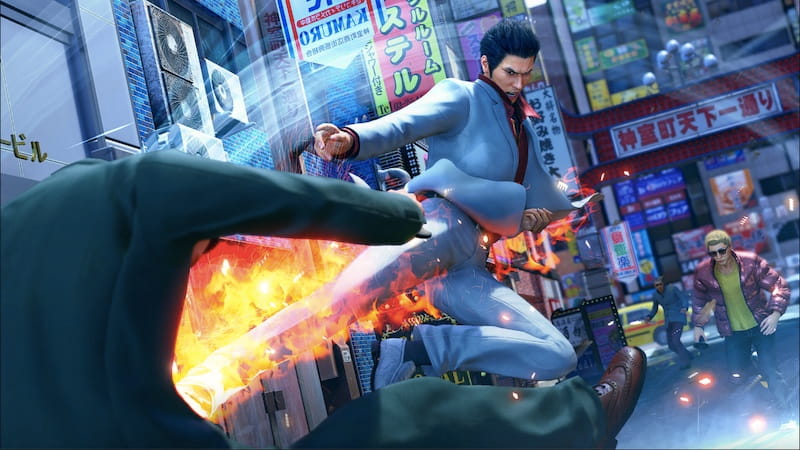
Combat is overall much flashier and far less clunky than the PS3 original, with smooth animations and far less time spent hammering away at blocking opponents. The bosses in particular are epic fights punctuated by QTEs and require diligent movement on your part, as you can’t just mash away and expect to win; dodging, blocking, and knowing when to exploit openings are key to victory, and these brawls are all the more rewarding for it.
I’ll admit that I forgot all about the Ryukyu style at multiple occasions and stuck with Dragon of Dojima, but that’s not to say it’s a bad style; I just felt more at home busting skulls the old-fashioned way. However, when I did switch it up, I found Ryukyu quite refreshing and its use of various weapons really help mix things up.
Levelling up your abilities feels a bit more streamlined too, replacing the ‘body, ‘soul’ ‘tech’ and other areas of the original, which no longer require orbs to invest in. Earning cash is easy, especially if you take part in side activities, so buffing Kiryu’s health etc isn’t an issue.
For some reason, RGG Studio decided to throw in an Aloha Links-style mechanic where Kiryu can get numbers of civilians using the same phone company as him. This allows you to view various details on characters, with more showcased overtime. Why? Who knows. It’s fun enough, but feels arbitrary and doesn’t add much to the game, particularly when it comes at the expense of cut features.
Also glaring are the various recasts for some main characters. Goh Hamazaki for example is by far the most egregious, as you have probably been aware of given that his new actor, Teruyuki Kagawa, was accused of sexual misconduct some years ago. To add to that, his new look feels more generic than the bulky, more menacing-looking villain he used to be.
Rikiya also has a new face to match his voice actor, and while his original model was technically not as realistic, it went a long way to accentuate his likeable, jovial nature thanks to some goofball facial animations. As such, he’s lost a lot the character that made him so memorable. Nakahara has also been recast but actually looks quite similar to the 2009 version, and overall the script doesn’t thankfully lose any of its punch; some dodgy facial animations aside, the cast deliver a solid performance.
Doing It For The Kids (And The Girl Gang)
One of the better inclusions for Kiwami 3 is the new girl gang side story. Here, Kiryu is appointed a mentor of sorts for the motorcycle group Haisai Girls, otherwise known as Bad Boy Dragon on the menu. Here, you guide them against their war against the Tokyo Night Terrors, but must first deal with local gangs causing a ruckus.
Baddie Battles are your bog-standard brawls on the street, in the sense they’re not too difficult and reward decent cash and level up your gang. The real meat of Haisai Girls is split into two distinct sets of missions: Turf War, where you attack the enemy stronghold by splitting into groups, and Total Annihilation, an all-out mass brawl against a rival and its leaders.
While Bad Boy Dragon doesn’t impact the main narrative, it’s still a meaningful time sink that feels satisfying as you grow your gang and increase combat prowess. Attacking enemy bases is a real adrenaline rush as you cruise on your motorbike before splitting into groups, laying the beat down on goons, and then advancing to the next stage before taking the main HQ.
Sometimes your other squads will need help, so you’ll have to burn rubber to their location before diving headfirst into a massive ruck – it’s quite a thrill. Total Annihilation meanwhile are pretty messy scraps and can get a bit button-mashy as there’s so many goons to dispatch, but are still challenging and never anything but entertaining.
Sadly, the brilliant Revelations system has been given the boot, along with the character of Mac. These wonderfully idiosyncratic events had Kiryu becoming inspired by often bonkers happenings while out and about, before posting them online via his phone and unlocking a new move.
Robbing Yakuza Kiwami 3 of Revelations is one of the biggest shortcomings of the game, as they were an intrinsic part of the game’s identity and provided some of the series’ most hilarious events. RGG Studio has also been a bit cheeky and artificially increased the length of both Kiwami 3 and Dark Ties by making you grind to specific ranks in various side activities, but fortunately this doesn’t happen often.
Yoshitaka Mine Shines In Brilliant Dark Ties
Speaking of Dark Ties, it’s a brilliant, if somewhat brisk endeavour. Here, you switch roles to Yoshitaka Mine, one of the principle players of the main story in Yakuza 3, and witness his inexorable rise through the ranks of the yakzua underworld. The antithesis to Kiryu’s character, Mine-san is cold, stoic and tough as nails.
His combat style evokes boxing and delivering bone-crushing blows, while his Shackled Heart mechanic (activated with R2 once you build enough meter; up to three can be unlocked) sees him go all-out in brawling; he’ll drag foes along the ground, unleash a bloody beat down with a flurry of punches, and tackle foes mercilessly.
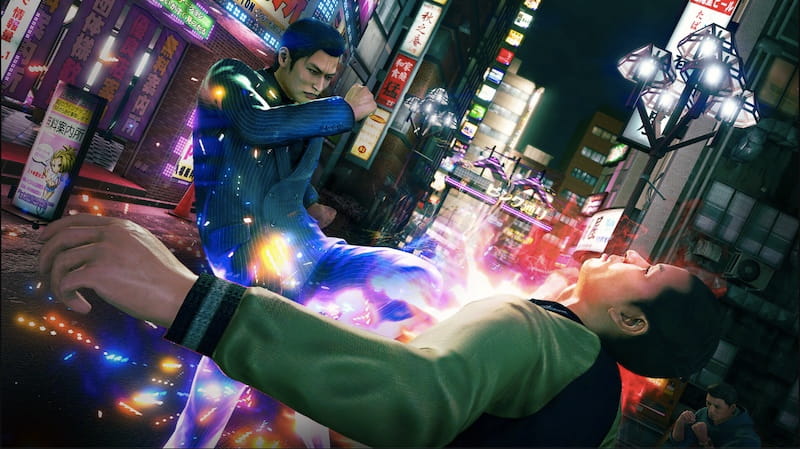
Mine’s fighting style feels fresh and manages to differentiate itself from Kiryu, so it doesn’t feel like you’re retreading old ground. He’s also loaded, but his upgrades cost a lot more to unlock (though again, money isn’t hard to come by if you love indulging in everything on offer).
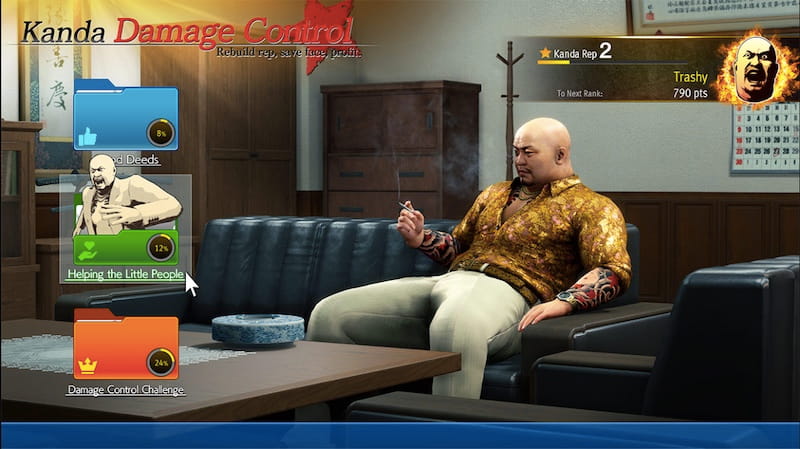
One of the key features here is Kanda Damage Control, where you have to restore your boss Kanda-san’s reputation across Kamurocho by taking on various tasks. Kanda was briefly featured in Yakuza 3 but RGG Studio has seen fit to flesh him out here.
It’s an odd choice, as Kanda isn’t a likeable person at all; he was banged up for sexual assault and as soon as he’s released he starts harassing a young woman on the street, who is saved only by Mine’s intervention. There’s interesting dialogue between him and Mine as they bond (he refers to the pair as ‘brothers’ numerous times and genuinely seems to like Mine; the feeling isn’t really reciprocated, though) and there’s some amusing juxtaposition at play with Kanda’s bullish, irreverent banter against Mine’s poe-faced nature.
Still, it’s clear you are not supposed to root for Kanda since he’s basically an arsehole, and is just a means to an end for Mine. Boosting the ex-thug’s reputation is pretty varied and there’s plenty of missions to undertake, from simply helping people on the street with various efforts or undertaking missions that offer more dialogue-heavy interludes and investigation.
One Hell Of A Good Time
I’ll admit that while not really giving a toss about Kanda himself, I found the whole Damage Control segments fun and addictive; doing good deeds felt rewarding, and the missions are varied and some of them give a bit more insight into Mine as a character.
One of the best inclusions here is Hell’s Arena, which is Mine’s answer to the Coliseum from Kiryu’s campaign. The idea? Make your way through waves of foes while ringing gongs to progress to the next area, ultimately defeating the guardian of each stage. The catch here is that there’s the option to explore each zone, picking up power-ups and cash along the way; if you get KO’d, you loose everything you’ve gained up to that point.
As such, Hell’s Arena offers a welcome spin on the regular Coliseum formula as there’s a wrinkle of strategy underlying its tapestry that feels rewarding and gives you a chance to weigh up the pros and cons with each match. You can buy buffs with your cash to equip, as well as hire mercenaries to give you a hand in combat (although I found myself doing most of the Donkey Work).
One thing I feel compelled to comment on is the ending. Now, I won’t spoil anything, and for those who never played Yakuza 3 this won’t really matter. However, RGG Studio has made some changes that have major implications for the canon of Yakuza 4 (and probably beyond, too) that had me raise an eyebrow. Were they really needed? We’ll just have to see how things pans out, but these changes will definitely prove controversial among fans.
Yakuza Kiwami 3 & Dark Ties is a worthwhile package that is particularly bolstered by some great additions and the fact Dark Ties is worth the price tag alone. Yakuza 3 has some questionable changes that fans will probably not be all that thrilled with, and some new additions feel a bit pointless. That said, the expanded Morning Glory is absolutely brilliant and acts like its own separate game; Dark Ties is the icing on the cake in this thrilling, action-packed and emotionally-charged package.
Review code kindly provided by publisher.
Yakuza Kiwami 3 & Dark Ties is due out for PS5, PS4, PC, Nintendo Switch 2, Xbox Series X/S, and Xbox One on February 12, 2026.