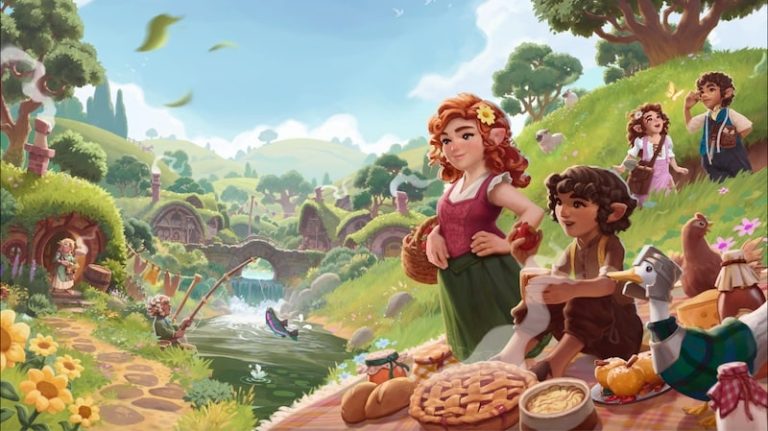
Tales of the Shire: A The Lord of The Rings Game PS5 Review. Many games come along that get carried by their IPs, and many others still don’t provide enough fan service to appeal to even the most die-hard of fans. Tales of the Shire: A The Lord of The Rings Game makes do with a combination of its IP along with a simplified farm/cooking sim to make it easier to coordinate and manage resources and demands. It’s not perfect by any stretch, but it still embodies the genre and the IP well enough to get by.
Tales of the Shire: A The Lord of The Rings Game Review (PS5) – A Narrowed-down Entry Point for Anyone New to Cozy Games
Narratively, there’s not much that sets up the story to Tales of The Shire. A beloved wizard we all know and love, simply called “Stranger,” finds you taking a nap along the road to Bywater. The stranger gives you a ride to your new home, and you meet the locals. In classic Hobbit fashion, you are greeted with backhanded compliments and a request for Second Breakfast.
In order to accommodate this Second Breakfast, they bring you to your new home to make said Second Breakfast. Hobbits know exactly what they want. Interacting with other Hobbits is what makes this game so charming. You get a real sense of what it’s like to live around a bunch of people who do not have a care in the world.
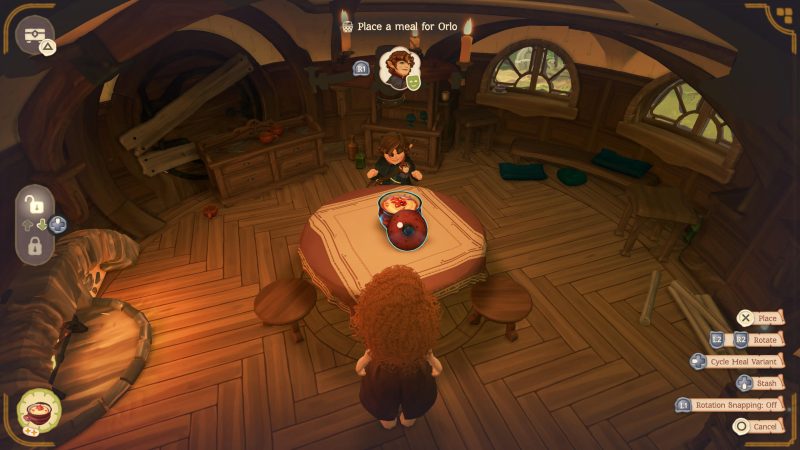
They get overly chatty and they say thoughtless things, but they always mean well, even if that “meaning well” isn’t in your favor. As a fan of the Middle-Earth mythos, I eat that right up. Equally so, if you enjoy more organic worldbuilding AND love a good, cozy environment, then Tales of the Shire fits right in your gaming library.
Channeling That Cozy Lifestyle
The Fellowship of the Ring game on PlayStation 2 comes to mind when I see this game. The aesthetic and fidelity in that game look similar to Tales of the Shire but with more polish and refinement. Nothing about Tales from the Shire pushes visual boundaries, but it carries with it a charming style that fits the setting and the genre well. The game showcases a lot of details without using high fidelity, which also contributes to the cozy nature of this game.
Sound is too easily under-appreciated in games like this. Offerings like Stardew Valley manage to put together a memorable soundtrack with charming sound bytes while others didn’t feel like they had any music at all. While not to that same quality, Tales from the Shire manages to carve out a nice bit of soothing background music. On top of that, the sound bytes used when interacting with people and performing tasks maintain that low-energy feeling that comes from cozy games.
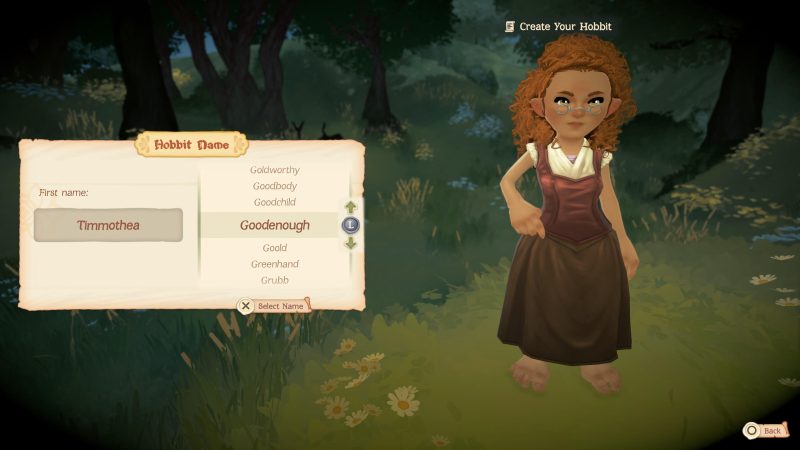
Performance doesn’t wow, but it doesn’t hinder either. Unless you pop a vein at the mere mention of 30 frames, then you can’t play this game. Equally so, the human eye naturally adapts to fixed frame rates, and it doesn’t take long to get used to the frame rate here.
Navigation Is Not For the Birds
Generally speaking, most of the game revolves around you moseying around Bywater, cooking, collecting crafting materials, and interacting with your fellow Hobbitses (sorry, I couldn’t help it). Just like any other cozy game, you do a lot of each of these things. With that said, the act of moseying around Bywater is a bit cumbersome. Naturally, the paths through the village wind every which way. If you actually lived there, you would need a lot of time to get used to navigating.
Tales of the Shire uses a map, which helps, but it does not come with a mini-map while you walk around. In other words, you need to open the map every time you can’t figure out how to get somewhere. The game tries to deal with this organically by using birds that line your path. If the game used flying birds that you could follow, that would be perfect.
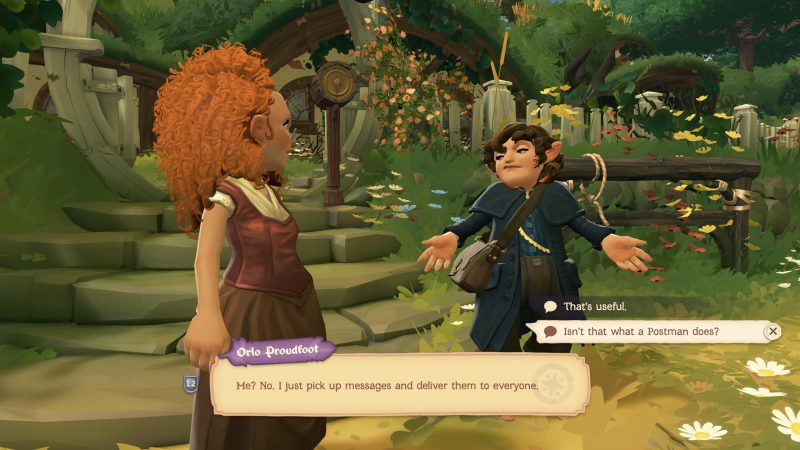
Here, however, birds keep landing on posts on your path. This causes mixed signals at road crossings. The bird lands on the signpost but doesn’t even point to the road you need to take. If you go in the wrong direction, the birds stop landing on objects along the road. That’s the only way you know you chose the wrong road. While the idea is cool, the execution doesn’t receive enough consideration to be as helpful as it should be. Just get used to opening your map while you get used to the layout of Bywater.
Concerning Cooking
As mentioned prior, cooking plays a significant role in this game. In order to increase social bonds with fellow Hobbits, you need to cook them food they like. In order to do that, you need to learn recipes. Many of these recipes come from successfully meeting Hobbit expectations by cooking what they want to eat. If that seems cyclical, it is.
What makes this more challenging is that you don’t just pick the necessary ingredients and put them together with the press of a button to make the meal. You need to also prepare each ingredient. You either chop them to a chunky or smooth texture or you pan fry them until they’re either crispy or tender. To make things even more challenging, the recipes don’t tell you how to prepare these ingredients in order to make the best version of each recipe.
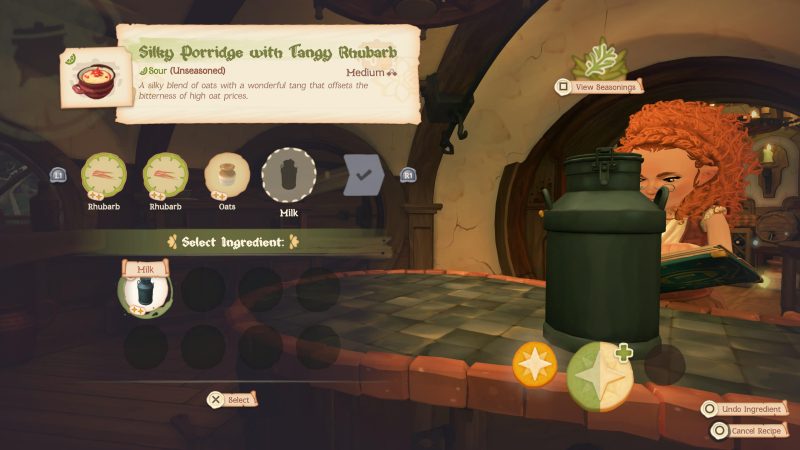
Once you nail the recipe, a gold star appears on the grid so you know what to do next time. With help from some guides, which is pretty normal when really digging into these types of games, nailing the right combination isn’t as hard as it could be. Still, depending on how you choose to play, this part of the game could be a major boon or bust depending on your thoughts on trial-and-error problem solving.
Gather Your Goods
To cook, you need ingredients, naturally. These come from planting seeds on your property, gathering plants out in the woods, buying seeds from vendors, and fishing. There’s not much variety in this just because the explorable space isn’t massive or doesn’t offer many changes in scenery. This is a consequence of cooking being the center of gameplay. The game world is small so it keeps you closer to your house. You can’t just cook anywhere.
Planting comes with odd caveats simply because of the small planters made available to you. Each seed requires a certain radius of space around it, and no other seed can be planted within that radius. However, the radius can go outside the planter just fine. Then, you can plant any seed at any time, no matter if the current season favors its growth or not. This does give you more flexibility at the cost of growth time, though.
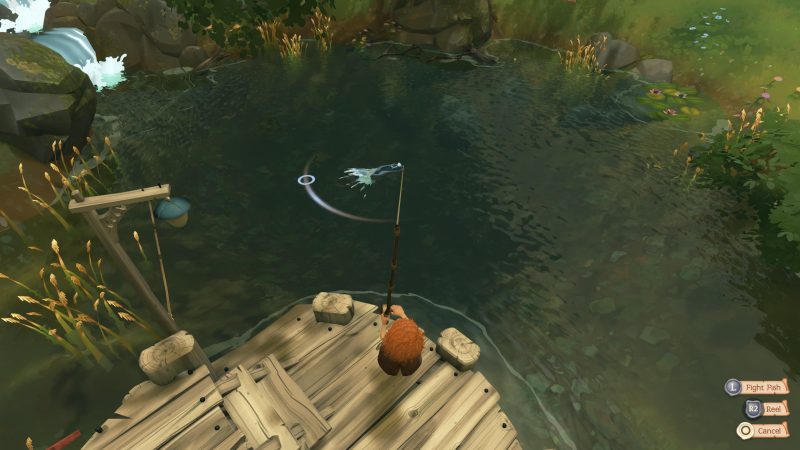
Getting seeds requires money, and the only way to make money is to sell ingredients to vendors. This is where progress starts to bottleneck. You need ingredients to make food and thus make meals to grow relationships with other Hobbits. At the same time, you also need to sell ingredients in order to buy new seeds. Thankfully, fishing can save the day on this, providing a good product to sell without taking ingredients away from too many major dishes.
A Light Snack Instead of A Hearty Meal
For what it is, Tales of The Shire puts together a cozy game that almost requires you to play a certain way to enjoy it. At the same time, the game makes it known what it wants from you from the very beginning. There’s charm here to be had with the right mindset. However, putting all of this together makes for a rather fixed and repetitive experience. For what it’s worth, Tales of The Shire stands as a solid formula for people who don’t often play these types of games. It replaces coordination and planning with hard work. By the time you’re done with this game, you’ll be ready to try some of the more renowned titles the genre has to offer.
Review code kindly provided by publisher.
Tales of the Shire is available now on PS5, PC, and Xbox Series.