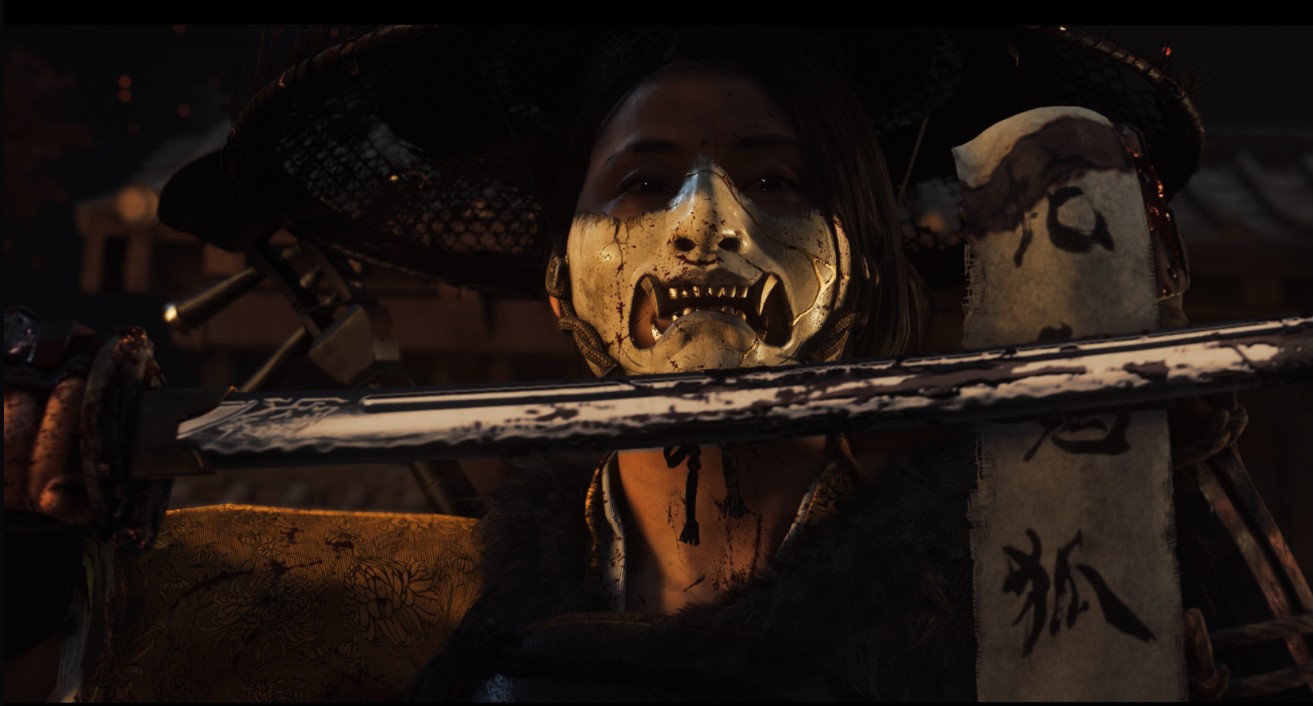
I’m trying to think of another instance where a sequel has hop, skipped and jumped so far past what its predecessor accomplished that the qualitative delta is almost unfeasibly vast and really the only title that manifests itself most prominently in my mind is Rockstar’s peerless Red Dead Redemption 2. I raise this idea because Ghost of Yōtei feels like to me that it accomplishes a similarly lofty feat, utterly outstripping absolutely everything its stellar predecessor, Ghost of Tsushima, did on practically every level and simultaneously cements Sucker Punch Productions as one of PlayStation Studios‘ marquee developers. You can relax now, Ghost of Yōtei is everything you hoped it would be and so much more.
Ghost of Yōtei PS5 Review
Ghost Of Yōtei’s Setting Couldn’t Be More Different Than Ghost Of Tsushima’s – And That’s A Great Thing
Like all the best videogame sequels, Ghost of Yōtei succeeds not just because it doggedly preserves the essence of what made its prequel, Ghost of Tsushima, so darn enjoyable, but also because it intelligently builds upon it in ways that push the envelope of the genre at large. First though, it’s important to zero in on where Ghost of Yōtei entirely separates itself from its much-heralded predecessor – namely, in its setting and central protagonist.
Taking place some 329 years after the events of Ghost of Tsushima, the main character of that game, Jin, is no more and in the place of the Mongol invasion Sucker Punch Productions’ sequel depicts a deep schism in the geopolitical and social vectors of Japanese society. As such, Ghost of Yōtei instead looks inward to define its struggle and finds it in the poisonous feedback loop of class struggle as peasants, ronin, shinobi and samurai all paint their plights in each other’s claret across a sweeping landscape of almost unfathomable natural beauty.
Much more than just incidental backdrop dressing, the layered socio-economical struggle that exists between the peasantry, ronin and samurai very much provides the denizens of Ezo, the picturesque Japanese island in which Ghost of Yōtei takes place, with the sort of plight that is both authentic and relatable – especially in the absence of a foreign aggressor. This tonal undercurrent of class struggle is felt early on in Ghost of Yōtei when Atsu comes across Manjuro, a down on his luck peasant who desperately wants to join the ranks of Lord Saito’s samurai so that he gain a measure of respect and, well, self-respect too.
Further afield, samurai are generally deeply distrusted by the populace at large as they are seen to be out of touch with the people and are deemed to be much too aloof for their own good. The ronin meanwhile are perhaps the most volatile aspect of this social dynamic, as many (though not all) tend to be bitter mercenaries who miss their former days of repute as honourable samurai, but now find themselves chasing the scraps of survival by any means necessary, moral compass be damned. As such, all of this serves not only to create a far more layered and sophisticated story than the one seen in Tsushima’s Mongolian invasion plot, but also to make Ghost of Yōtei‘s world feel much deeper and intimate in than its 2020 prequel.
Against this evocative backdrop Ghost of Yōtei unfurls the tapestry of vengeful tale with Atsu at the very centre of its story. Whereas Ghost of Tsushima was equal parts a story about claiming Jin claiming his homeland back from hostile invaders and reclaiming the honour of his clan, Ghost of Yōtei at its heart is a savage and unblinking tale of revenge that perhaps has more in common with the likes of big screen classics such as Kill Bill and Lady Snowblood rather than anything else.
To be clear right off the bat, Atsu is not some sort of cynically, gender-swapped Jin and neither is she a samurai of any real stripe. In fact, without spoiling too much, Atsu both largely despises the samurai class and has no designs on attempting to force her way into their ranks whatsoever. Instead, she sees the samurai and ronin of Ezo as providing unique means for her to get revenge on the members of the Yōtei Six – a half dozen strong cabal of powerful individuals which include the nefarious Lord Saito – a disgraced though hugely influential samurai lord with designs on becoming the Shogun of Ezo.
Atsu’s driving reason for wanting to put these folks firmly into the soil is simple, as a child she witnesses the Yōtei Six murder her entire family, pin Atsu to a burning tree and subsequently leave her for dead. A cause for revenge? I certainly think so. Rather than play this tale of revenge in straight however, Ghost Of Yōtei instead elects to skip between periods of time which show Atsu as a little girl and as a fully grown adult, with the former leveraged as a flashback storytelling device of sorts.
Where Ghost Of Yōtei implements this storytelling device a little bit differently is in how it provides the player with sufficient agency to switch between the past and the present at specific junctures. When at Atsu’s homestead or at particular parts of Ezo in which our protagonist has memories of her past, holding down the DualSense’s trackpad button will instantaneously whisk Atsu back to an earlier time as her younger self, providing an eye-opening demonstration of the PS5’s still super fast SSD into the bargain. By having Atsu’s past run concurrently to her present from a storytelling perspective it makes the stakes in Yotei feel all the more personal, because the trauma is renewed with every flashback as we witness Atsu living her life with her family before tragedy strikes.
When it comes to the big bads of Ghost Of Yōtei, the Yōtei Six aren’t just a bingo list of hapless, one dimensional idiots – they each have their own sophisticated backgrounds, motives and behaviours that make them feel like end game bosses in their own right. Much more than just double hard goons with chunky health bars, each member of the Yōtei Six not only has their own twisted background story which manifests in a number of beautifully (and sometimes cruelly) unexpected ways, but each also has a distinct fighting style as well, presenting a unique challenge to the player as a result. My only complaint about the Yōtei Six is a small one, but I just wish that Lord Saito, the leader of the Yōtei Six and Ghost of Yōtei‘s arch antagonist, had his backdrop fleshed out a little more than it actually is. Apart from a handful of cutscenes, Lord Saito’s lore is chiefly revealed in the many scrolls that are dotted around Ezo – which feels like a somewhat dull and stale way of providing exposition to such a key character.
Ghost Of Yōtei’s Open World Has A Lot In Common With Red Dead Redemption 2 – Rejoice!
Arguably more than any other aspect of Ghost of Yōtei‘s design, it is the craft of its open world which stands out as a key point of differentiation with its much heralded predecessor. How Ghost of Yōtei primarily manages this lofty feat is by its almost wholesale rejection of the typical open world exploration template which feels much more organic in that you never feel like you’re staring at a map awash with icons and busywork, but rather are presented with a sprawling and enticing world that you’ll want to explore on your own terms and which offers up discoveries that feel genuinely surprising.
Certainly, exploration in Ghost of Yōtei is a chain of infectious curiosity from one discovery to the next and one that somewhat mirrors Rockstar’s seminal Red Dead Redemption 2 in this regard. Chiefly, developer Sucker Punch Productions has achieved this by infusing its world with a sense of delightful randomness which I found to be frequently surprising and delightful in equal measure. These events, which do not appear on your map, make Ghost of Yōtei feel much more spontaneous than anything you’ll run into in Ghost of Tsushima.
In one example I found a woodcarver who had toy dolls stolen by nearby thugs that he was going to give to children, offering a bounty to have them returned. While in another, I came across a woman in labour who was being protected by her husband as Saito’s forces attacked – something I could easily have missed otherwise. As such there’s this grand sense of discovery that is inherent in Ghost of Yōtei‘s open world design. Where open world titles tend to typically fail is in the journey from one point in the map to another, but in Ghost of Yōtei, such journeys are often filled with the sort of surprises and incidental encounters that made Arthur Morgan’s trek across the American West so thoroughly enjoyable and engaging. Put simply, Ghost of Yōtei, much like Red Dead Redemption 2 before it, feels like it has tapped into a sense of true player-driven discovery that has been sadly lost to the open world adventure genre for far too long.
The practiced hands of Sucker Punch Productions also perform a range of other minor miracles which further bolster the player’s connection to Ezo. One of these is that you can now encamp yourself pretty much anywhere on the island where through natty use of the DualSense touchpad you can use flints to start a fire (gently depressing the R2 trigger to fan the flames), turn over mushrooms or fish on said flames for combat and exploration buffs by using the motion control functionality of the DualSense controller, or alternatively bust out a tune on Atsu’s trusty shimasen.
Further Reading – Upcoming PS5 Games 2025 – The Best PS5 Games Coming Soon
The thing is, sometimes you’ll be camping out in the wild and a random settler will just walk up to you and start a conversation, or a friend that you’ve met elsewhere in Ezo might join your campfire for a catch up conversation, or just to hawk you their latest wares. Again, this is just one more example of how Ghost of Yōtei seeks to involve the player in its world, rather than having them separated by a degree and turning what is otherwise a lush open world into a box ticking exercise of skull-crushing busywork. More of this please, open world enjoyer developers.
One other way that Ghost of Yōtei continues to eschew the open world status quo – much like Ghost of Tsushima did more than five years ago – is in how it gently guides players to the next objective and places of interest. Crucially, you’re guided by your eyes and a sense of wonder and not by a load of bullet pointed objectives. There’s always some natural indicator in the environment – swarming dragonflies, gusts of wind, chirping birds to direct you and by using your handy spyglass, you can spot far off structures, plumes of smoke and more to pinpoint your next journey. Basically, the days of some droll waypoint arrow or great sloshes of gaudy yellow paint are gone here and long may that continue to be the case.
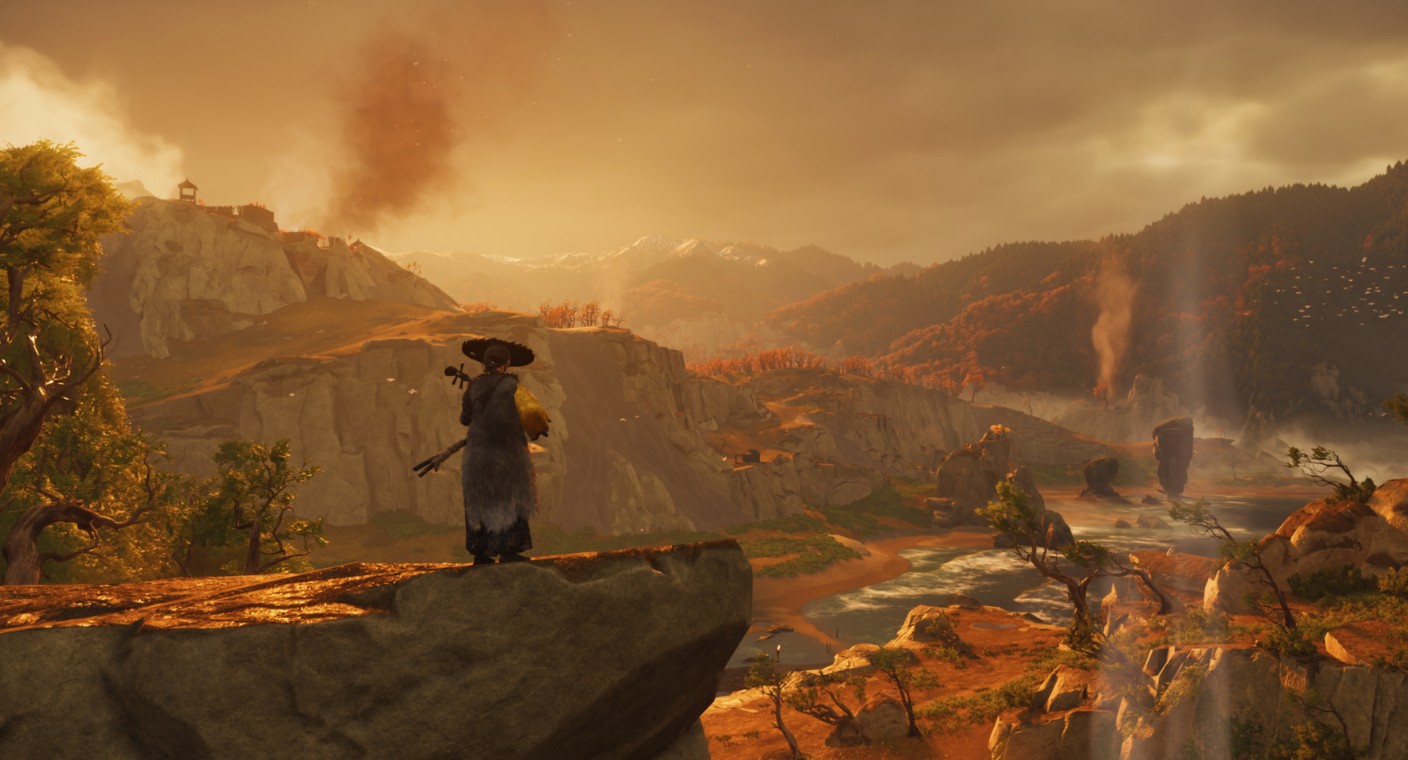
To be clear about one thing in relation to traversal, though the ability to fast travel from one discovered location to the next exists (and is practically instantaneous), I found myself deciding not to use it if an unexplored tranche of the world map lay between myself and my next objective. Speaking of objectives, Atsu’s shimasen is much more than just a casual pastime, it’s also intertwined with many of the progression systems that are layered into Ghost of Yōtei. Whether it’s tracking down charms to buff Atsu’s various abilities, maximum health boosting hot springs, bamboo strikes to improve your spirit or wolves to aid you in combat, Atsu can learn new songs throughout the game which allow her to track down these various progression upgrades.
For those wondering, nabbing skill tree upgrades or new charms is once more accomplished via a veritable assault course of platforming challenges that sees Atsu climbing peaks, leaping from branch to branch and leveraging a grappling hook to reach difficult to reach places. Though hardly a challenge in terms of traditional platforming difficulty, it’s difficult not to gawk at the gorgeous world that surrounds you as you steadily make your way toward your goal and so taking on these sorts of challenges feels more relaxing than anything else.
If you’re concerned that the cheeky little foxes seen in Ghost of Tsushima are absent in Sucker Punch’s sequel, don’t be. Though the mischievous orange fluffsters have been displaced as the game’s mascot (Ghost of Yōtei‘s wolves take that honour for reasons which dovetail directly into the main story that I can’t go into here for fear of spoilers), they still present Atsu with special challenges of their own across Ezo in order to nab specially calibrated charms and, yes, you can still pat them and listen to their silly little giggle-laughs.
Further afield, Atsu can make a living as a bounty hunter of sorts and honestly, money rewards aside, these bounties are simply worth taking on their merits regardless. Every bounty that you can take on has its own story and cinematic events that help to make each feel like their own little spectacle, rather than the next box to be ticked on the open world activities bingo card or some sort of design afterthought.
Ghost Of Yōtei Is A Technical And Artistic Marvel, Plain And Simple
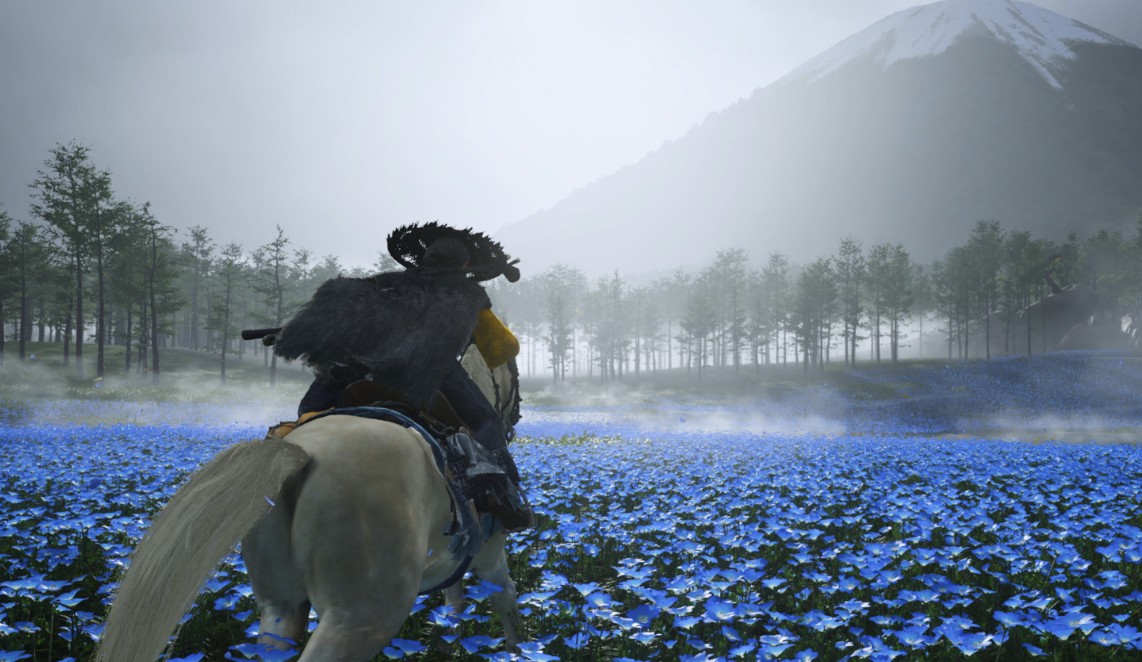
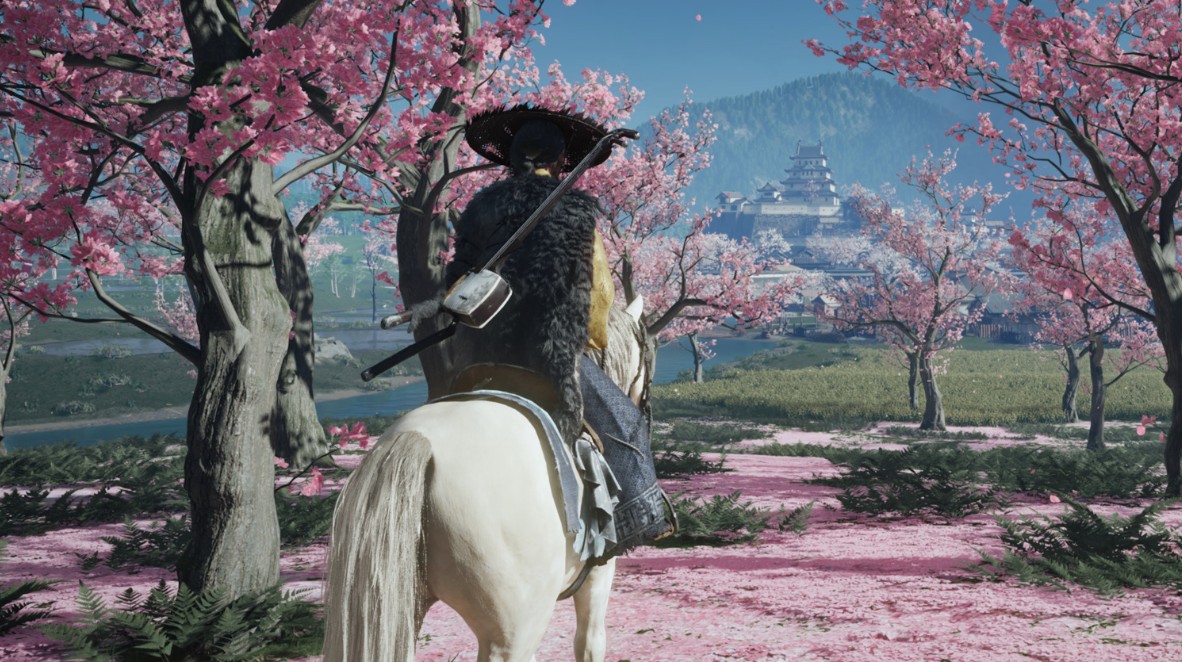
Ghost of Tsushima was and absolutely remains a stunning looking effort that married technical achievement with vibrant artistic flair in a way that no open world title had really managed to accomplish up until that point. Ghost of Yōtei expounds on this approach, yielding a depiction of historical rural Japan that is unmatched in its natural beauty and spectacle, as rose petal freckled lakes and ponds give way to gentle peony hurricanes that spring up behind your horse as you gallop through their fields of brilliant white, while Mount Yōtei itself catches a glimpse of the midday sun, cementing the impressive spectacle of this geological titan.
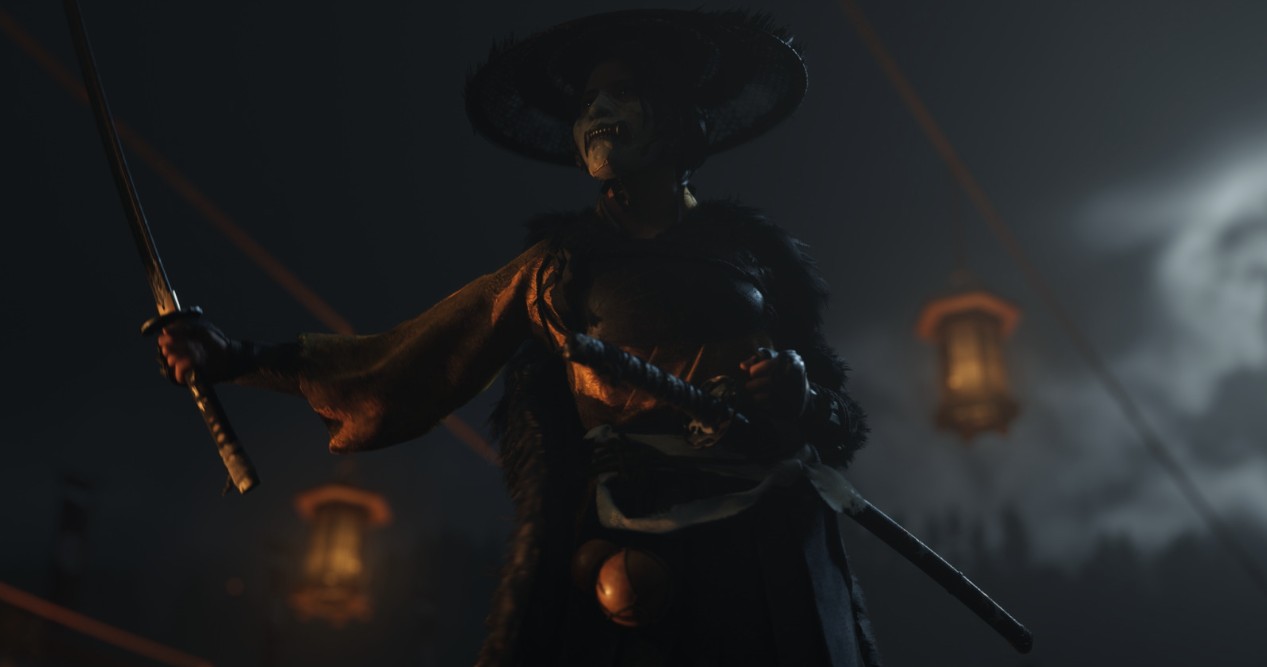
Indeed, each of the different environments in Ezo are pregnant with the visual language of the seasons. Whether it’s the snow-capped hills and thoroughfares of Teshio Ridge or the lush, verdant fields of south Yōtei that explode with flower and plant of every hue as birds scatter across its rivers and scores of wild horses gallop across its surface, Ghost of Yōtei is 17th century rural Japan with the the visual romanticism cranked to 100 and I’m absolutely here for it. Following in the footsteps of Ghost of Tsushima, Ghost of Yōtei wastes little time in showing off its gorgeously realised world to the player with an inescapably rousing opening title card sequence that is easily as breathtaking as the one seen in its predecessor.
If there’s one reliable showcase for the opulence of Ghost of Yōtei‘s visual presentation, it would be the various duels which return from the previous game. Visual spectacles all, these duels aren’t just a test of your skills, but they each serve as unique showcases for Ghost of Yōtei‘s enchanting presentation as well. Whether it’s a duel which takes place in a veritable swarm of butterflies or a high-stakes confrontation in shallow waters while waves crash violently against obsidian rocks, it’s clear that in a fashion akin to its predecessor Ghost of Yōtei has a keen eye for spectacle and then some.
Also, neat little visual details abound everywhere – if you pull out your map while it’s raining you see the droplets landing on the paper, while stomping about in the thick snow leaves unique prints depending on where you go and duelling in a pile of fallen leaves causes them to be whisked up into a retina-pleasing, autumnal tornado. Though much has been made of Ghost of Yōtei‘s various cinematic filters, I found the Kurosawa filter to be the most effective as it not only provides a scratchy, black and white filmic filter but also muddies the sound quality in line with those earlier Kurosawa samurai flicks.
In terms of the other filters, the Miike mode adds in generous blood spurts and increase blood splashes but little else (the gurgling blood spurt sound is a bit forced for my tastes), while the Watanabe mode, which adds a lo-fi soundtrack to the proceedings in a fashion similar to what Shinichirō Watanabe pulled off with his excellent Samurai Champloo TV series, feels at odds with Ghost of Yōtei‘s much more serious presentation. Happily though, you can combine all or some of the modes as you like to find a combination that appeals or, you know, you can just not bother and play Ghost of Yōtei as is.
From a technical perspective Ghost of Yōtei soars. Boasting quality and performance modes, Ghost of Yōtei not only provides liquid smooth, 60 frames per second action on even the base PS5 console, but some beautifully implemented motion blur to boot. With some great material work on clothing and the various building structures around Ezo, together with a total lack of slowdown, great lighting, stunning water reflections and shadow effects, Ghost of Yōtei increments upon technical prowess of its predecessor with aplomb, but is still broadly comparable to what Sucker Punch Productions achieved back in 2020.
Still on the topic of visuals, lip synching across audio tracks is now much, much improved this time around, while lucky PS5 Pro owners gain access to ‘ray tracing pro mode’ which not spits out a super crisp resolution at 60 frames per second, but also lavishes a bunch of ray tracing effects on the top.
Ghost Of Yōtei Has The Best Sword Based Combat In Any Game And It Isn’t Even Close
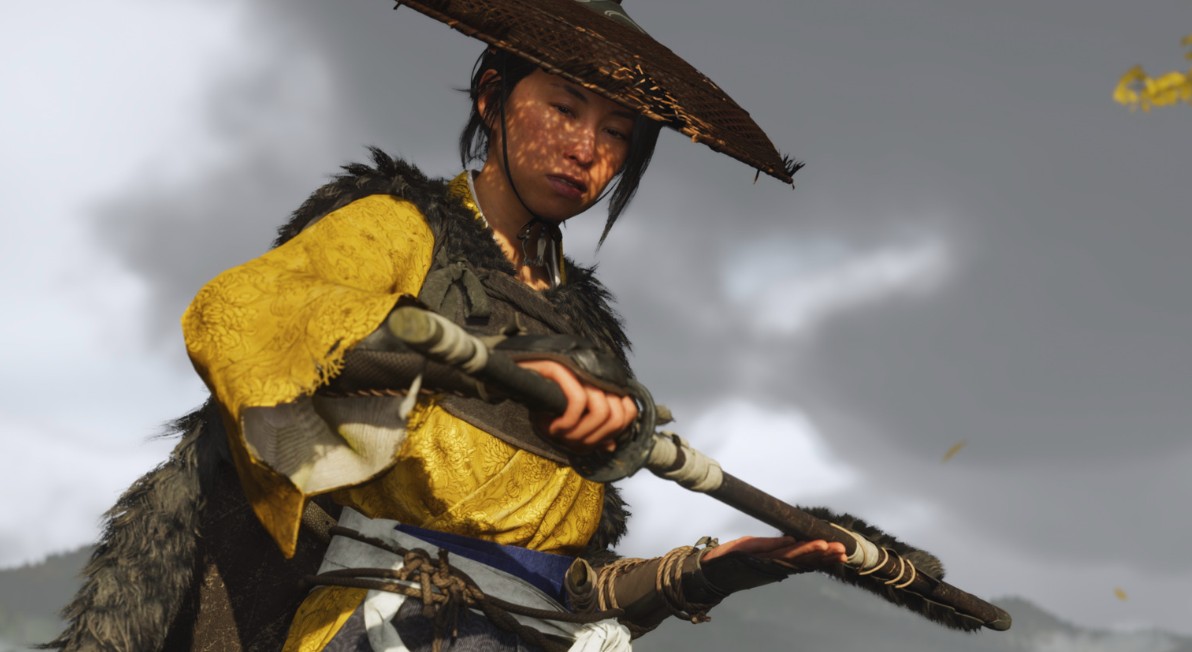
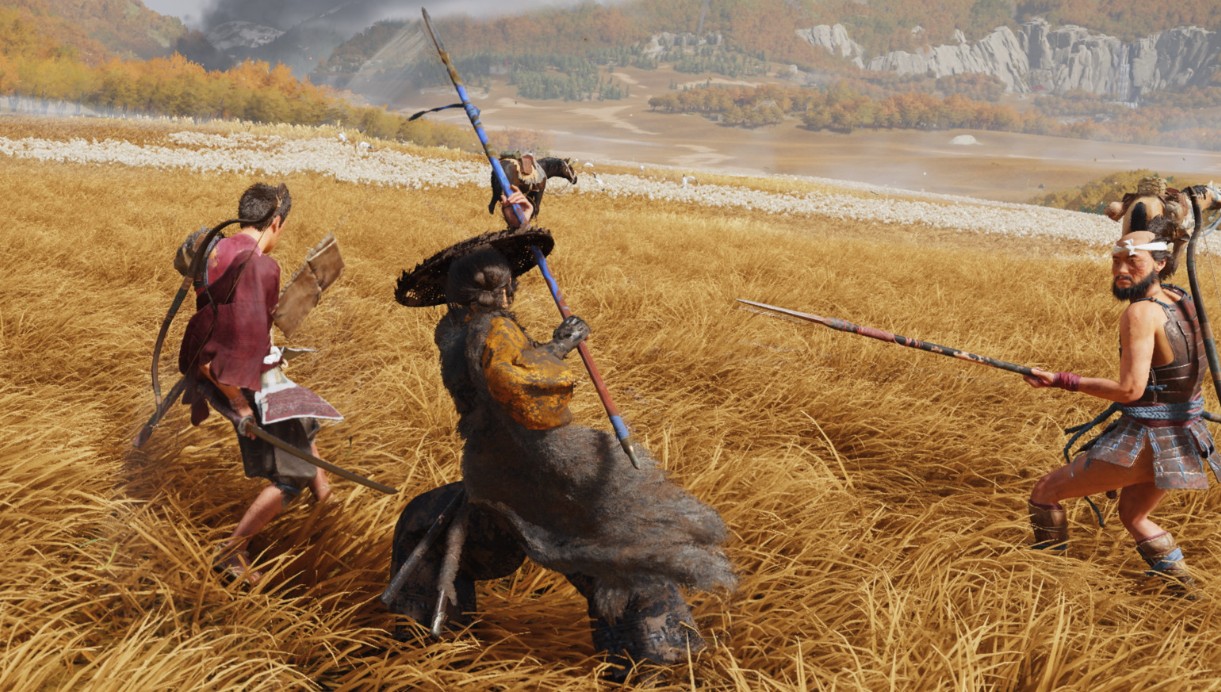
Of course, perhaps the marquee attraction of Ghost of Yōtei, in the same vein as Ghost of Tsushima before it, is the combat. Oh boy, the combat. The best samurai combat in video games bar none, combat in Ghost of Yōtei is so darn satisfying because it achieves a kind of intersectionality that other titles sorely lack. Starting with the combat styles, Ghost of Yōtei replaces the stance-based combat of Ghost of Tsushima with entirely distinct weapon-based disciplines. This means that Atsu can learn all manner of additional fighting styles in addition to her starting single katana style, including the likes of dual-katana wielding, leveraging the yari spear, odachi blade and more besides.
Rather than just uncovering these new fighting styles as you progress through the game, Ghost of Yōtei actually has specific ‘sensei’ style missions attached to them where you meet up with a master of that particular style and complete a set of story based missions for them which feed into the overarching narrative. Unlike other similar efforts where after unlocking different weapon types you tend to stick to just one because it works well against any and all enemies, in Ghost of Yōtei each style is highly effective against enemies using particular styles and less effective against others, almost in a sort of rock, paper, scissors style situation. Of course, you can still win if you’re using a yari against someone wielding a katana for example, but the precious stagger meter that you need to max out in order to start dealing damage to your enemy will take that much longer to trigger.
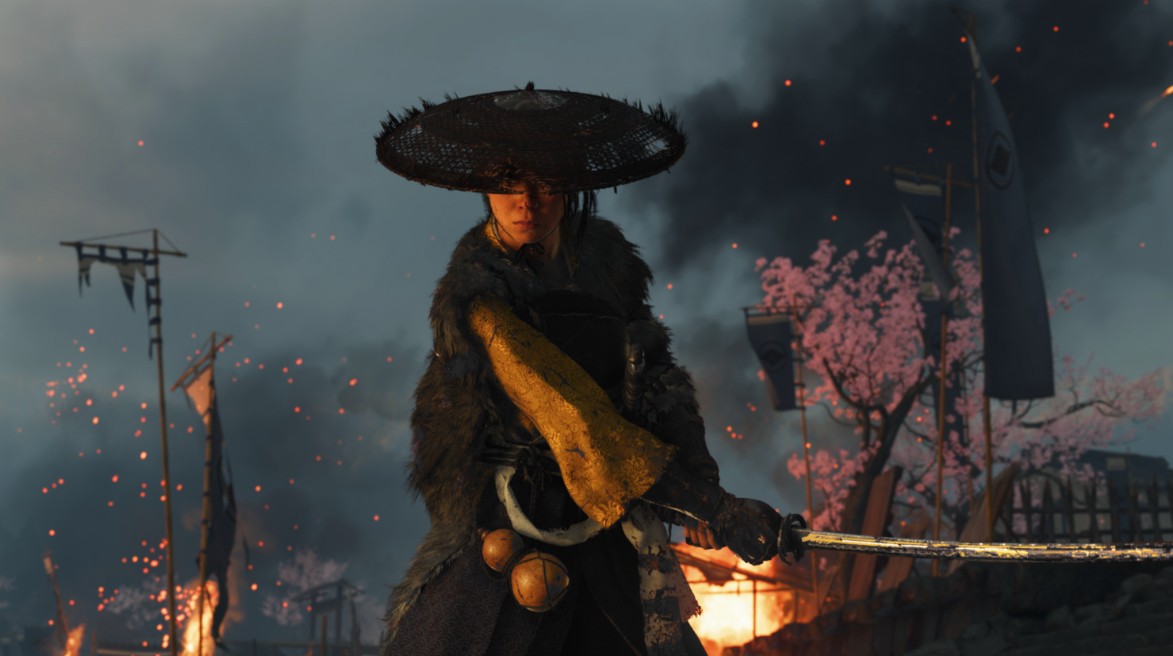
Ghost of Tsushima enjoyers will be pleased to note that parrying and particularly perfect parrying, where you parry a split-second before an attack lands to momentarily stun your foe prior to delivering a devastating counterattack, returns in Ghost of Yōtei. However, you can’t just parry your way to victory here, as enemies can unleash unblockable red attacks which crash straight through your attempts to parry (for the most part), while yellow attacks can disarm you entirely – though you can also learn this technique and do it to your foes in turn.
What makes the combat in Ghost of Yōtei truly exceptional though, is the manner in which you can combine all manner of different elements from your arsenal into a grimly attractive display of balletic ultraviolence. With access to a range of quick fire gadgets such as blinding dust, kunai, firebombs and even firearms in addition to your main mode of attack, there’s no shortage of creative latitude to the sorts of things you can do in a given encounter. In one scenario for example, I was surrounded by four attacking ronin and immediately started the fight by cleaving the first dude in a standoff sword draw at which point my wolf ally tore the throat out of the second. I then performed a forward roll and picked up a sword that was dropped by one of them, hurled it into the chest of the third and then my trusty angry forest doggo savaged the fourth one, leaving him distracted long enough for me to run him through with my katana.
Simply, combat in Ghost of Yōtei feels magnificent, with every clash of swords, every parry, every counterattack and every impact of your blade into the meat of your enemies just ramping up the satisfaction meter in turn. Basically, if you loved the combat in Ghost of Tsushima, you’ll adore what Sucker Punch Productions have cooked up here.
Ghost of Yōtei is that rare sequel that not only maintains the essence of its highly successful predecessor, but also qualitatively leapfrogs it in just about every meaningful way and metric. Underscored by a grippingly furious tale of revenge inspired by a layer cake of classic Japanese samurai cinema, the best combat ever seen in a samurai title and the most compelling open world since Red Dead Redemption 2, Ghost Of Yōtei is a jaw-dropping demonstration of Sucker Punch Productions operating at the peak of its considerable powers. Ghost of Yōtei redefines the term ‘must-have’ and wholly validates PlayStation Studios broader approach to embracing single-player epics such as this.
Ghost of Yōtei releases for PS5 on October 2, 2025.
Review code kindly provided by PR.