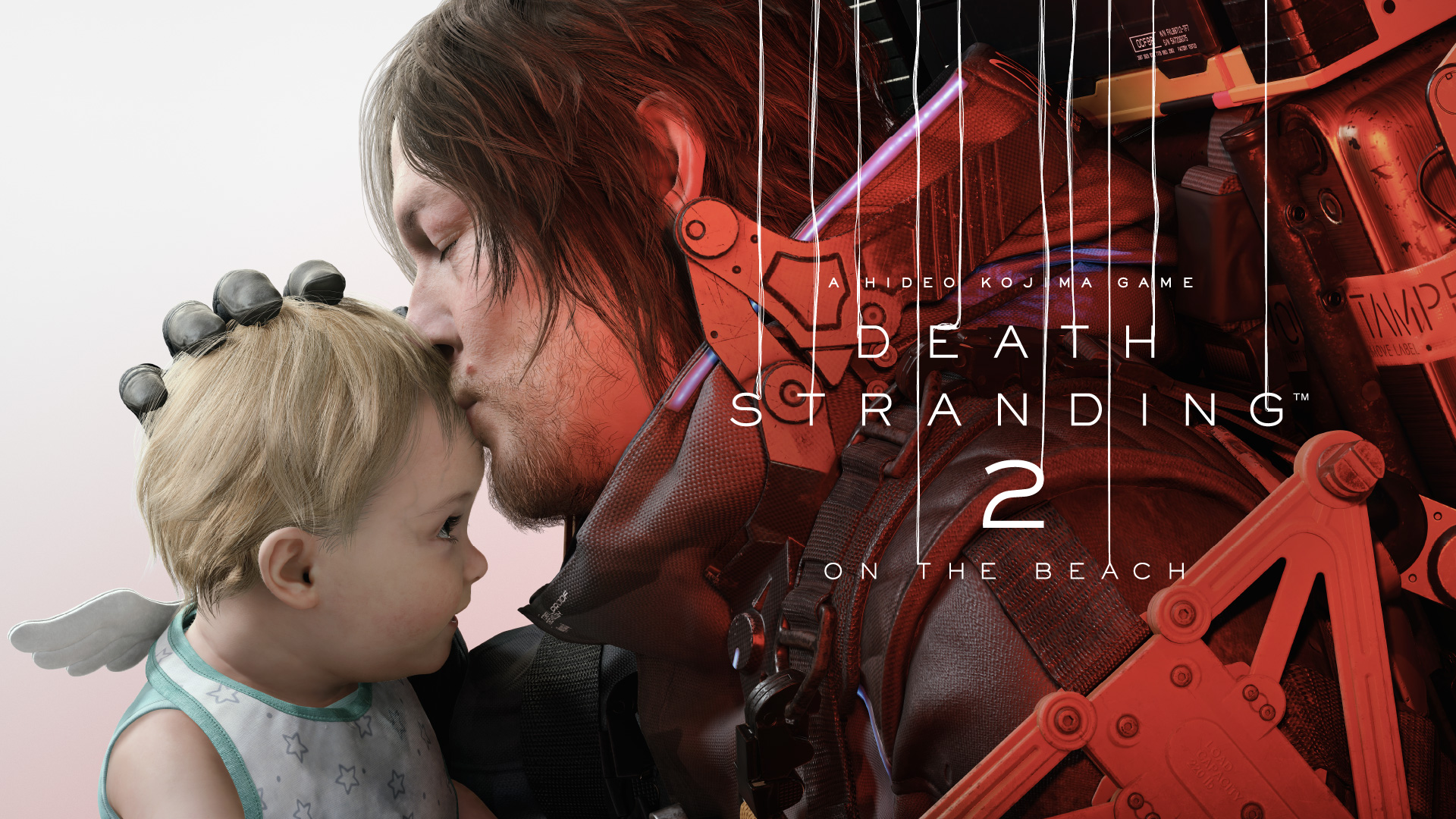
Death Stranding 2: On The Beach PS5 Review. The prospect of a direct sequel to Death Stranding is one that immediately raises a myriad of questions; the original game is a wholly singular experience that is truly unlike anything else that I’ve experienced in my years playing games. An asynchronous experience that masterfully blends narrative theming into its core gameplay, a sequel would have to do well to capture that same feeling and meaningfully grow it beyond “just another game.”
Which is why I’m pleased to share that Death Stranding 2: On The Beach demonstrates an intelligent evolution of the foundations forged in the first game. Improvements are pointed, intentional and only serve to make the experience all the more distinct. Death Stranding 2: On The Beach is a sequel that knows what it does well and refuses to capitulate to people who were never going to enjoy it in the first place.
Just like the game that came before it, Death Stranding 2: On The Beach confronts issues compellingly, forcing us as players to bear witness and become a part of that story, in more ways than one. It’s a game that can only exist now, and I’m so glad that it does.
Death Stranding 2: On The Beach Review (PS5) – Life’s A Beach
Getting Back On The Trail
Death Stranding 2: On The Beach begins nine months after the conclusion of the previous game, where Sam Porter Bridges has abandoned his role in the government body, Bridges, and taken his Bridge Baby to live a secluded life in peace. For players who have played the first game, there’s an immediate pleasure in seeing just how happy Sam is with Lou; he’s still as stoic as ever, but there’s an undeniable warmth to him as a father figure.
This focus on Sam’s relationships forms the cornerstone of the main story this go around, with far more emphasis being put on the supporting cast when compared to the comparatively isolated experience of Death Stranding. Following the disruption of this peaceful life in Mexico, Sam picks up the backpack again and sets out on a mission to connect Australia to the chiral network, in the same vein as the UCA, alongside the other passengers on the DHV Magellan, your mobile base of operations.
This is where the game settles into a familiar cadence of picking up orders, delivering them and steadily connecting more and more people to a growing network.
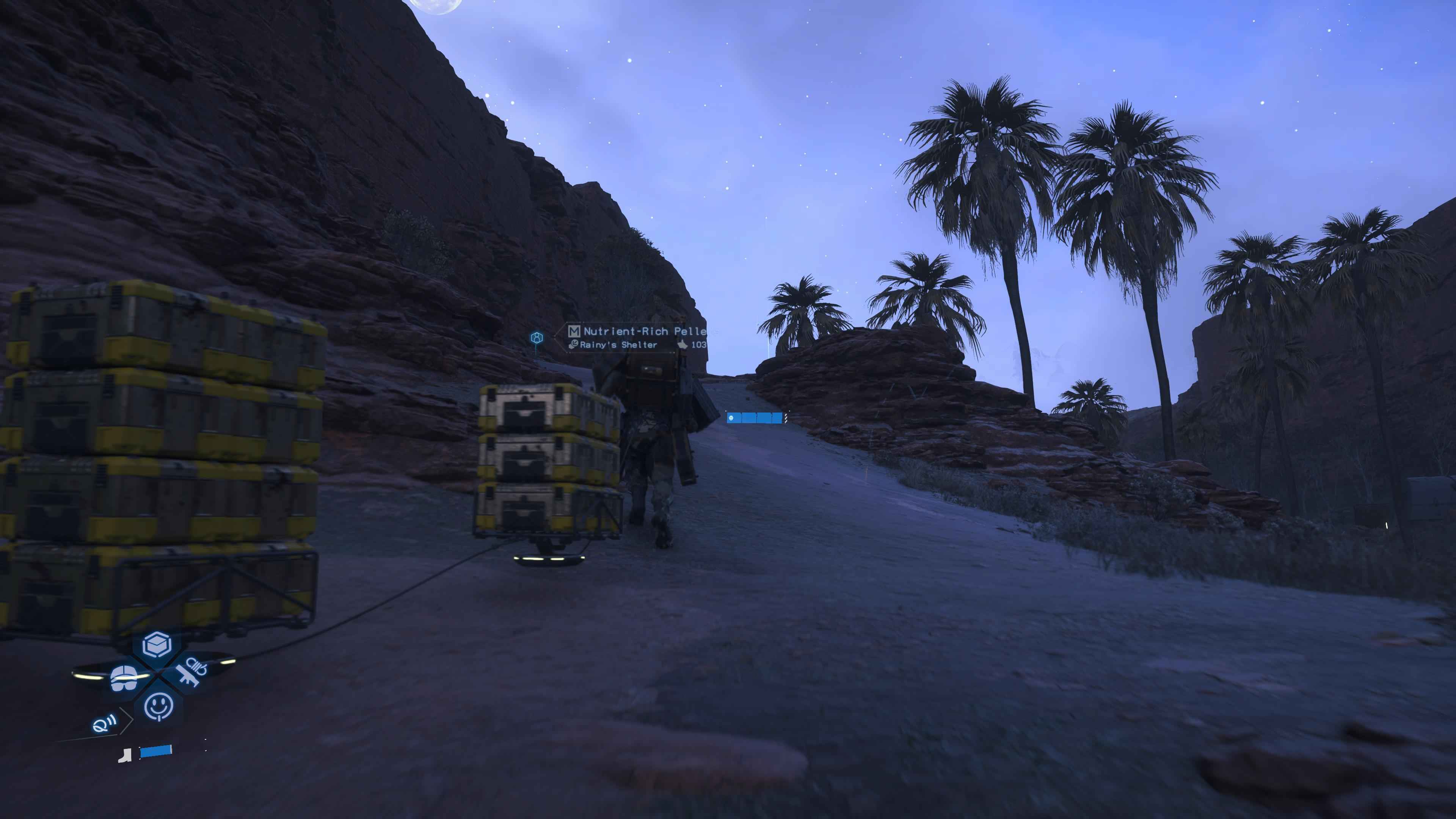
Blow for blow, it’s the same as it was in the first game. And for a good portion of the game, I was worried that it was a bit too familiar. While there’s nothing wrong with the formula at play here, it definitely felt like I was going through the motions with a game that already takes its time to get moving.
But it soon dawned on me that this was the intended experience and that I was missing the (visually stunning) forest for the trees.
Death Stranding 2: On The Beach, in its broadest strokes, is a game about finding comfort in the work that we do. The importance of moving forward and keeping ourselves busy, even in times of struggle. Our reliance on the frameworks that are given to us.
You cannot separate the narrative from gameplay in Death Stranding, and this almost goes in an entirely alternate direction to the original game, and does so masterfully.
In keeping with the traditions of the first game, Death Stranding 2 isn’t a game for everyone. It holds itself to the idiosyncrasies that made it so divisive, and doesn’t even attempt to sway audiences who were put off in the first place. It iterates, rather than reinvents. And while I wish that this repetition wasn’t as long in the tooth as it is, I can very easily forgive it for what comes later.
Some New Tricks Up Your Sleeve
Saying that, there are some meaningful improvements on the original game that shouldn’t go understated. Downtime is still a massive part of the Death Stranding experience, but that doesn’t mean that the pacing hasn’t been tightened across the board.
This wasn’t something that I noticed until I went back to the first game to compare, but the speed at which you unlock advanced transportation options is far more generous.
While you’ll still be making some long and treacherous hikes, I always felt like I was improving and expanding my arsenal in meaningful ways. The innovative asynchronous multiplayer makes a compelling return and is still as collaborative as previously. You’ll contribute materials to projects to make deliveries far easier for everyone in the world.
Even in the review window, I’ve steadily seen the world start to show the sprouts of development as we’ve slowly contributed to each other’s structures – what’s better than quite literally paving the way for people who come after us?
As well as the improvements to pacing, I also found that the variety of missions within the main quest and sub-orders has been increased significantly, with far more opportunity for self-expression and a variety of approaches. If there’s one part of Death Stranding 2 that shows the most active improvement, it’s in the combat.
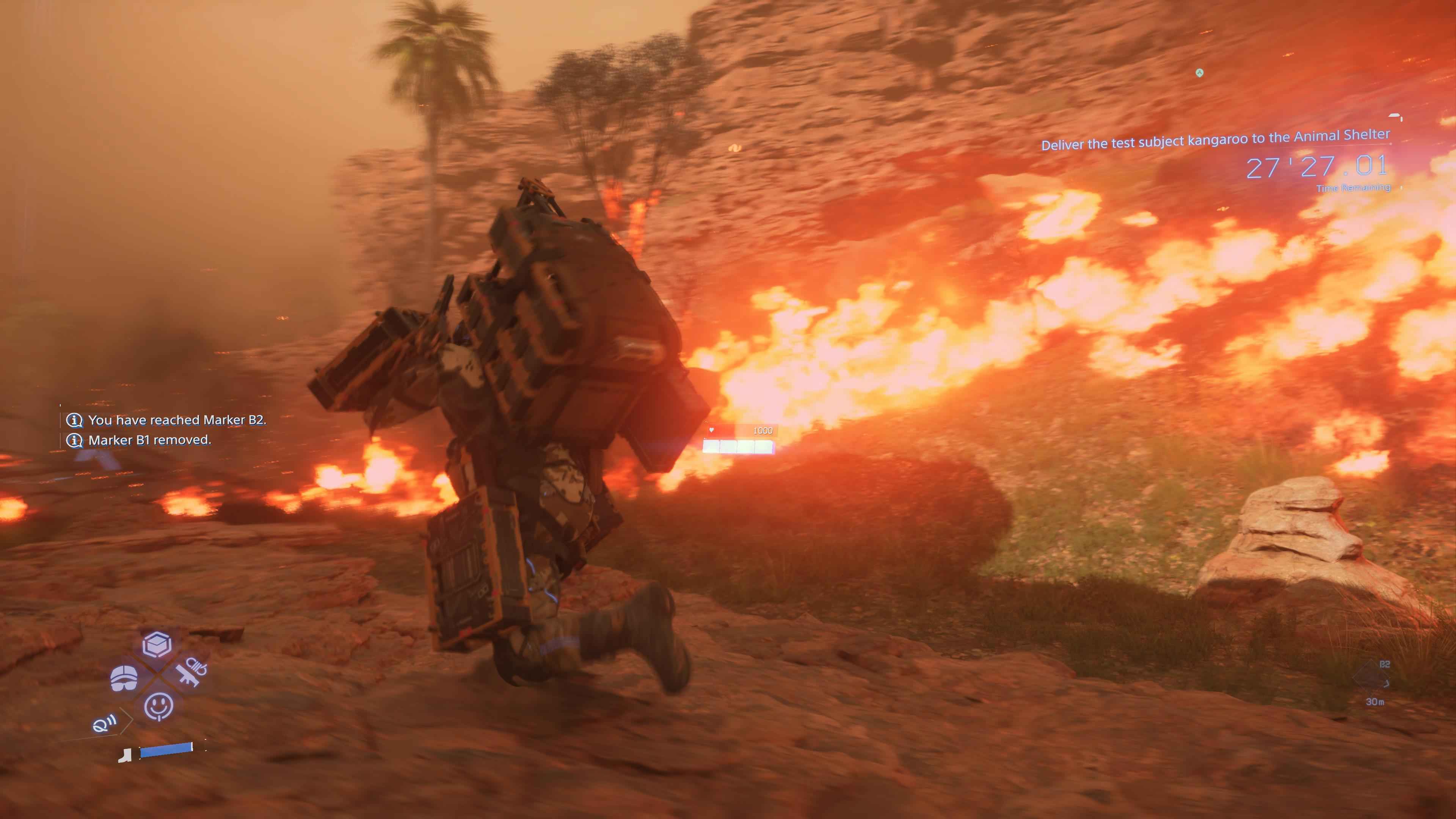
Where the first game actively discourages you from engaging in combat unless absolutely necessary, the sequel throws caution to the wind. It throws you into scenarios where fighting is a viable (and often, the preferable) option. With this pivot, gun combat has received a significant overhaul, with less friction in letting you fight enemies. Combat is crunchy, guns have satisfying feedback, and there’s a pretty broad variety of obtainable weapons across the world. This ranges from the pretty standard fabricated ones to some more interesting types later down the road. The world of Death Stranding 2 is still very much operating on a general rule of “no killing if we can help it,” so I was impressed with how much more variety they managed to squeeze out of a largely non-lethal ruleset.
Of course, that doesn’t mean that lethal force is out of the question, should you so choose. Just be prepared to deal with the disposal of the corpse or a massive hole in the ground.
In a slightly ironic twist, this ends up lessening the impact of the incredibly imposing BTs, which were such a highlight previously. I never felt the same sense of threat throughout my journey, but I wonder if that was by design. Death Stranding 2: On The Beach makes a point of highlighting how far technology has come as a result of the work done in the first game; blood grenades no longer require you to supply your own blood and most weapons are natively effective against most threats.
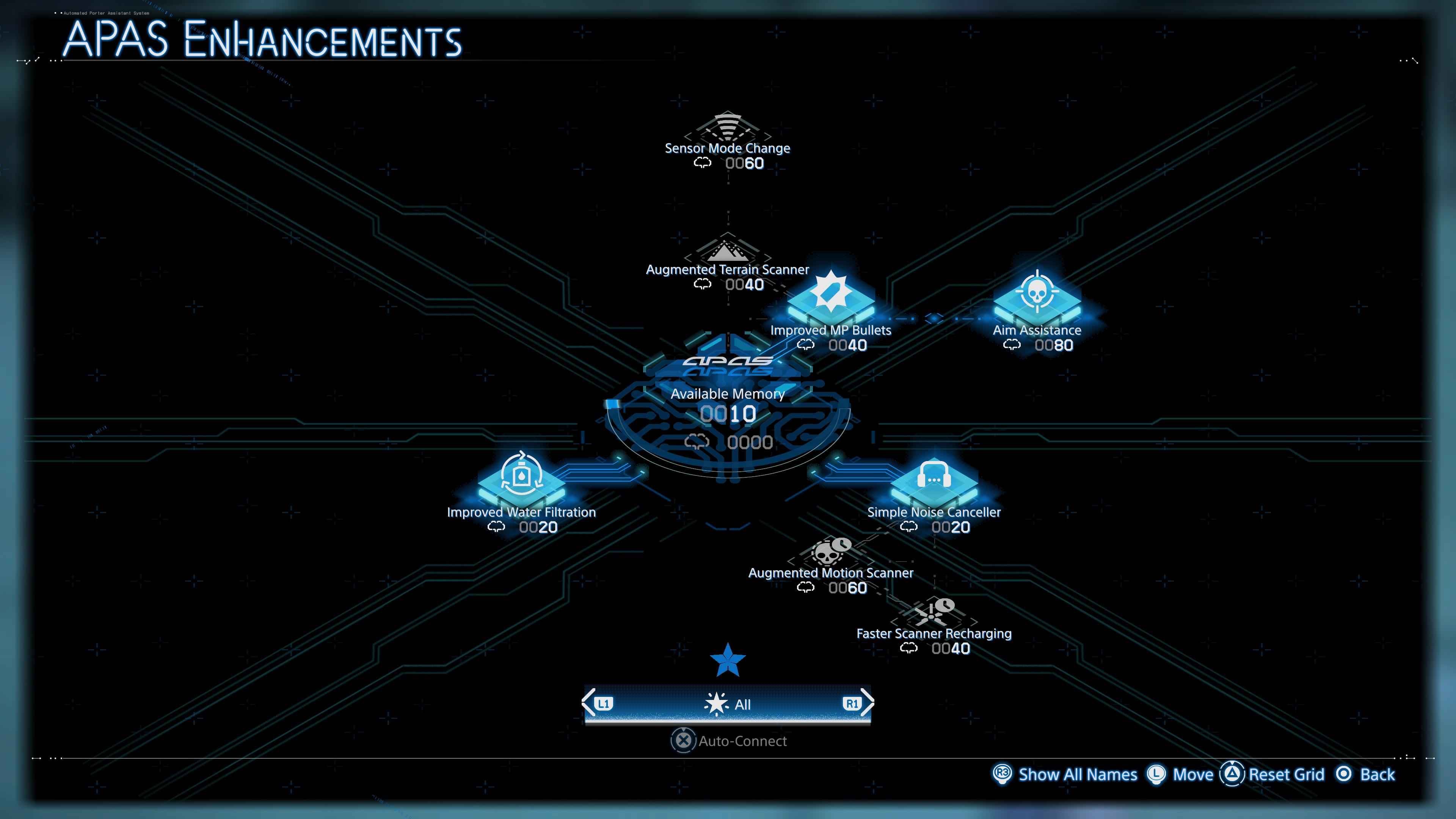
The world of Death Stranding 2 is a more comfortable one, and one that’s gotten more used to the existential threat of BTs and voidouts, even if by a small degree. The APAS skill tree system similarly emphasises the increased ease on this adventure, with the ability to assign Sam specific advantages and to adjust them at will, which once again allows for some fun expression, even if none of the abilities are particularly reinventing the wheel.
If anything, I found myself wishing that the game would possibly slow down with the sheer amount of new tools I found myself being able to use. More than a few cool potential items were left to the wayside very quickly, and some feel a bit wasted. Despite this, all of them are genius inclusions that each feels unique.
A Visual Marvel, In Every Sense
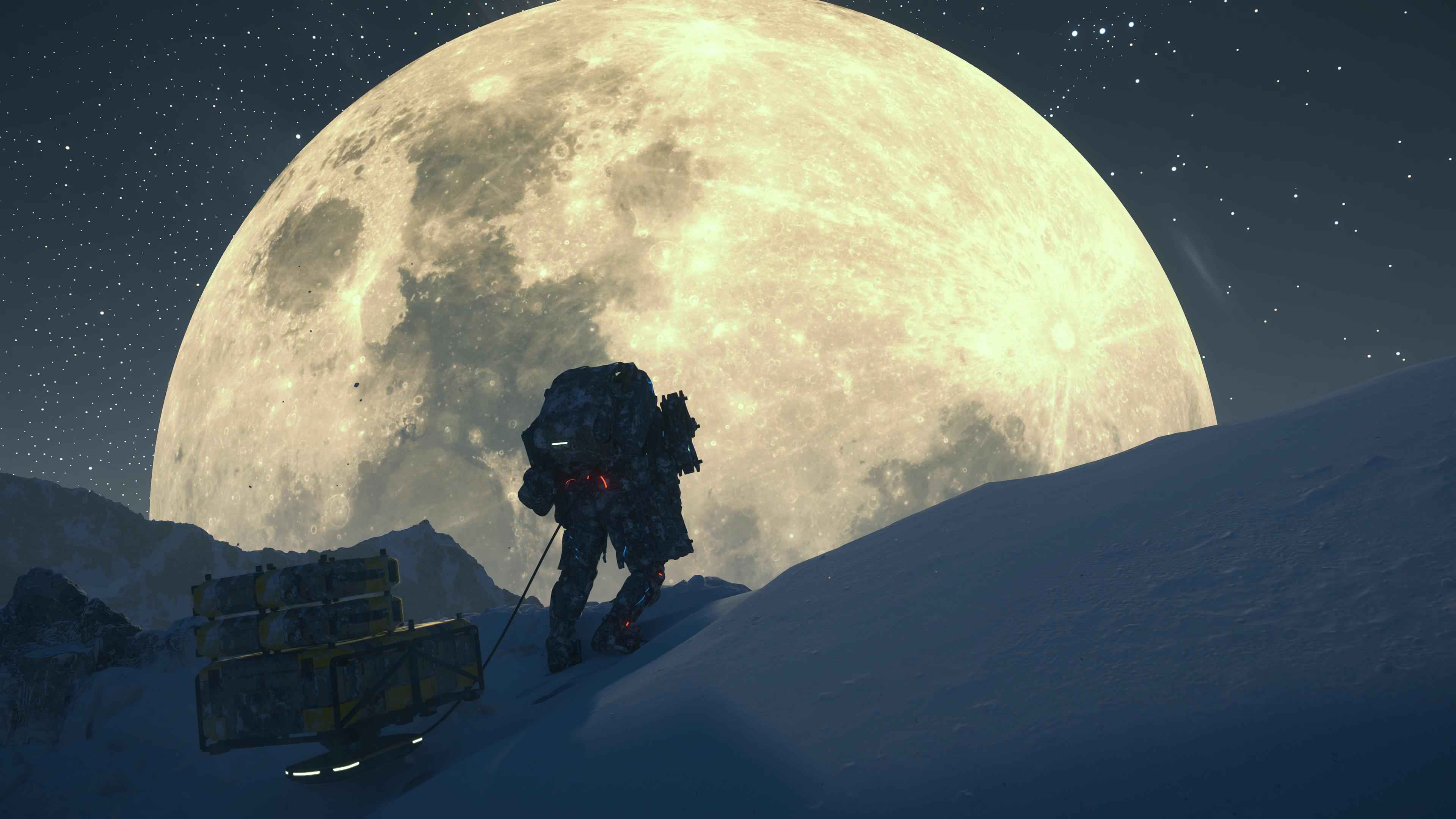
It’s become almost a generic statement to comment on the fidelity of games that aim for photorealism; we’re no stranger to games that manage to cross the boundary into borderline film quality. And yet, I feel compelled to comment on the sheer beauty that this game holds.
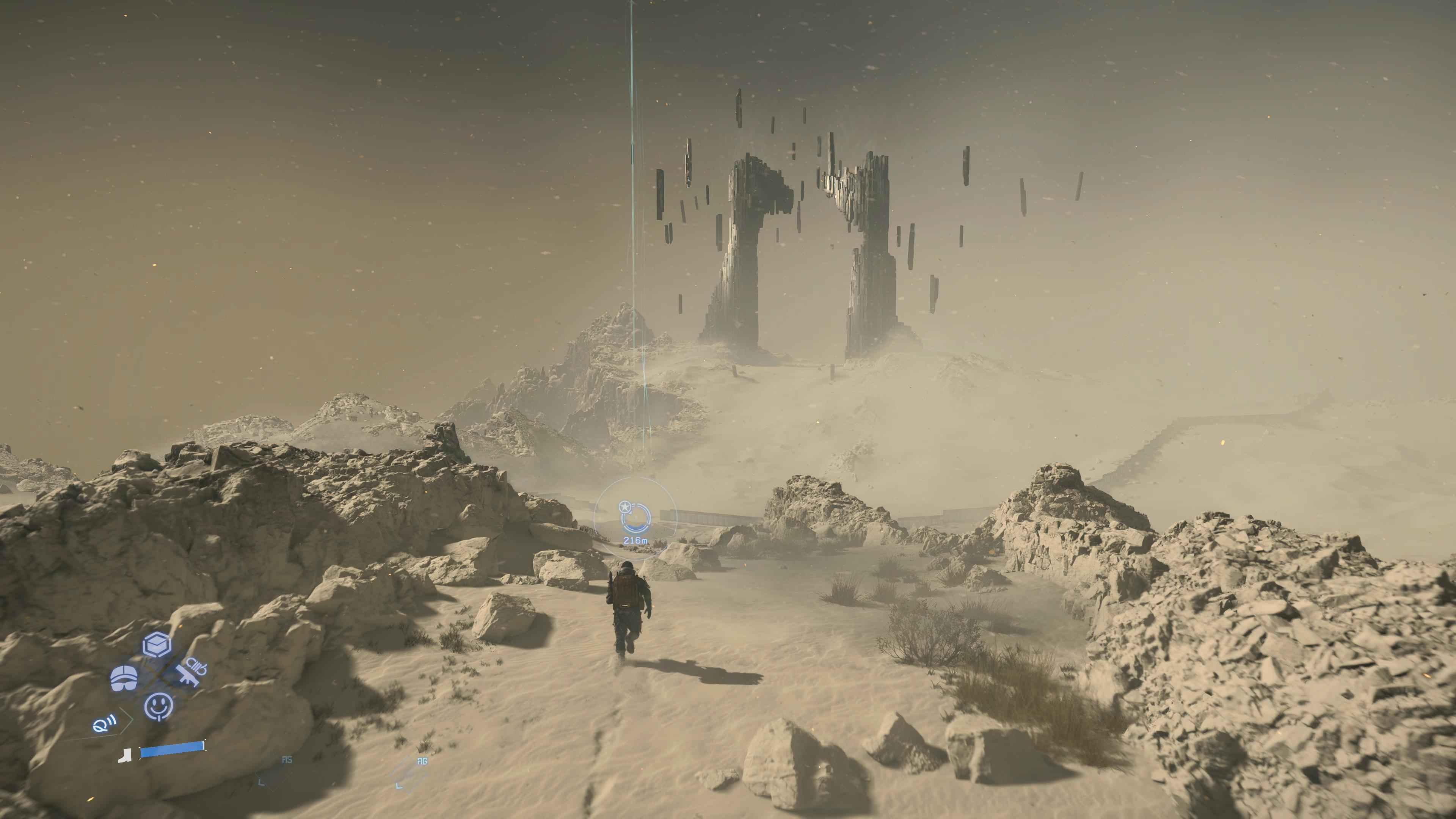
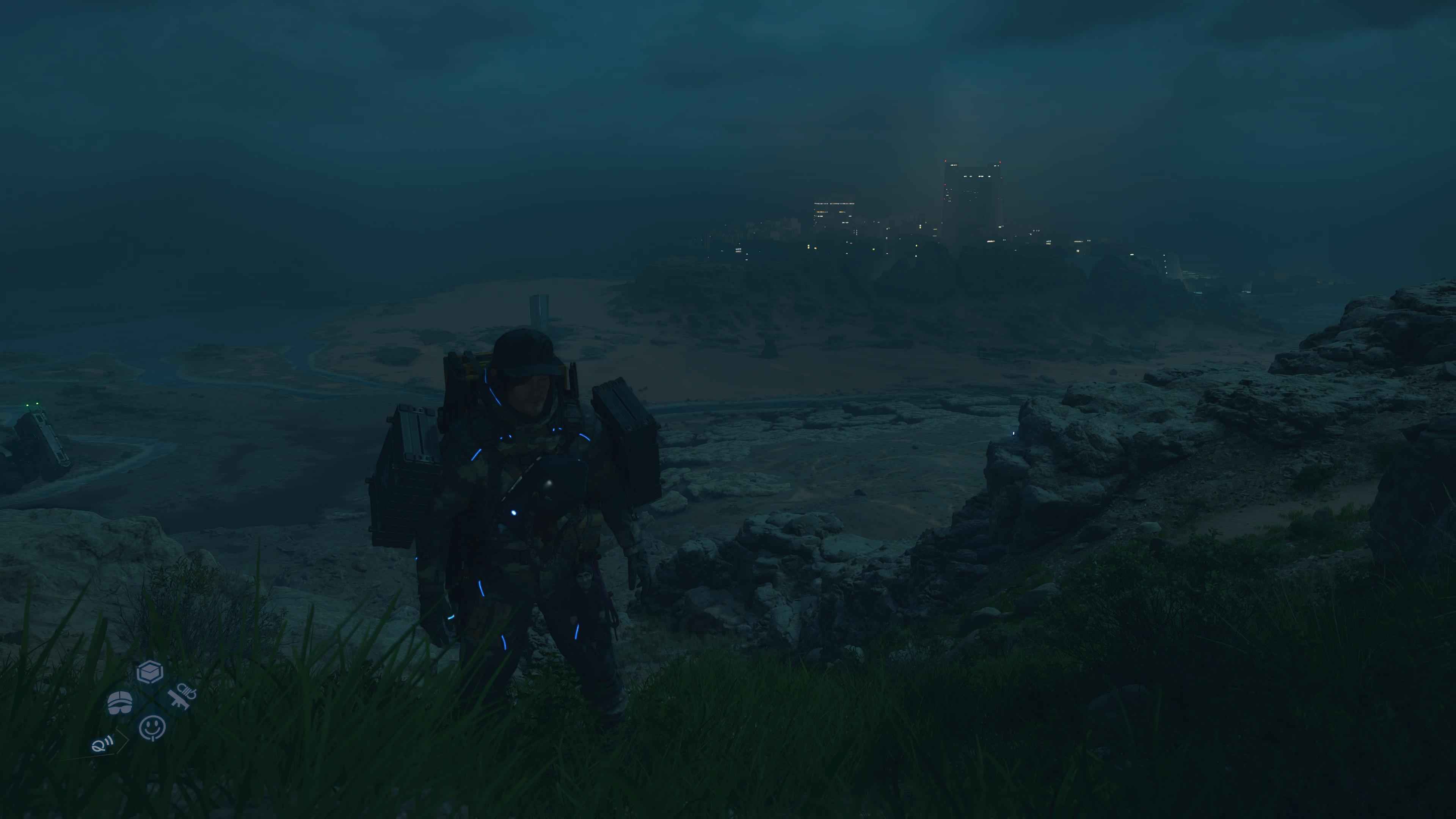
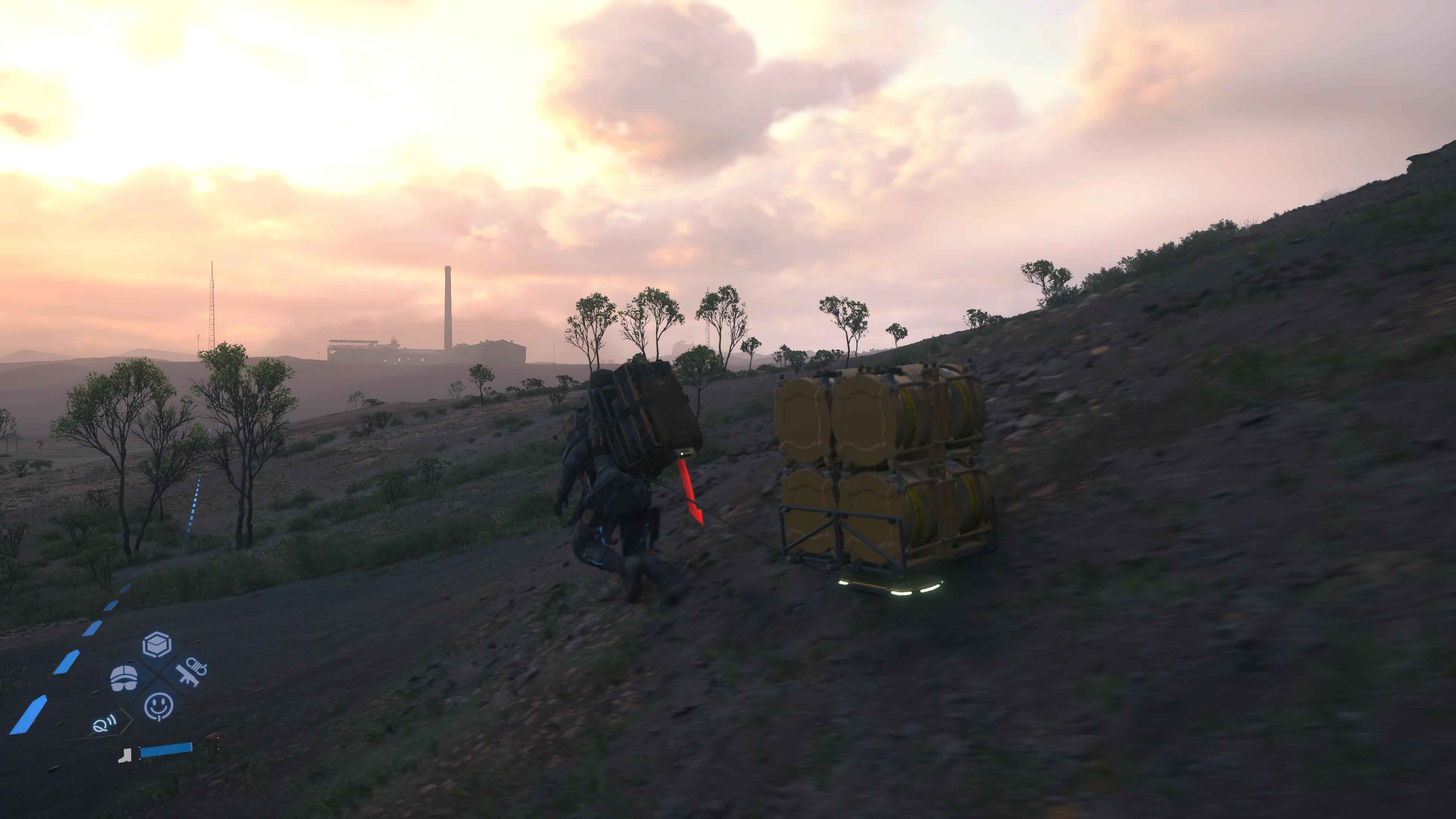
The environments of Death Stranding 2 have moved beyond the almost Nordic-inspired grey of the original, and into some incredibly diverse locales that each offer both gameplay variety, as well as some downright gorgeous setpieces. This is further pushed by the inclusion of a natural day cycle, which naturally changes the way that you see areas, as well as approach them.
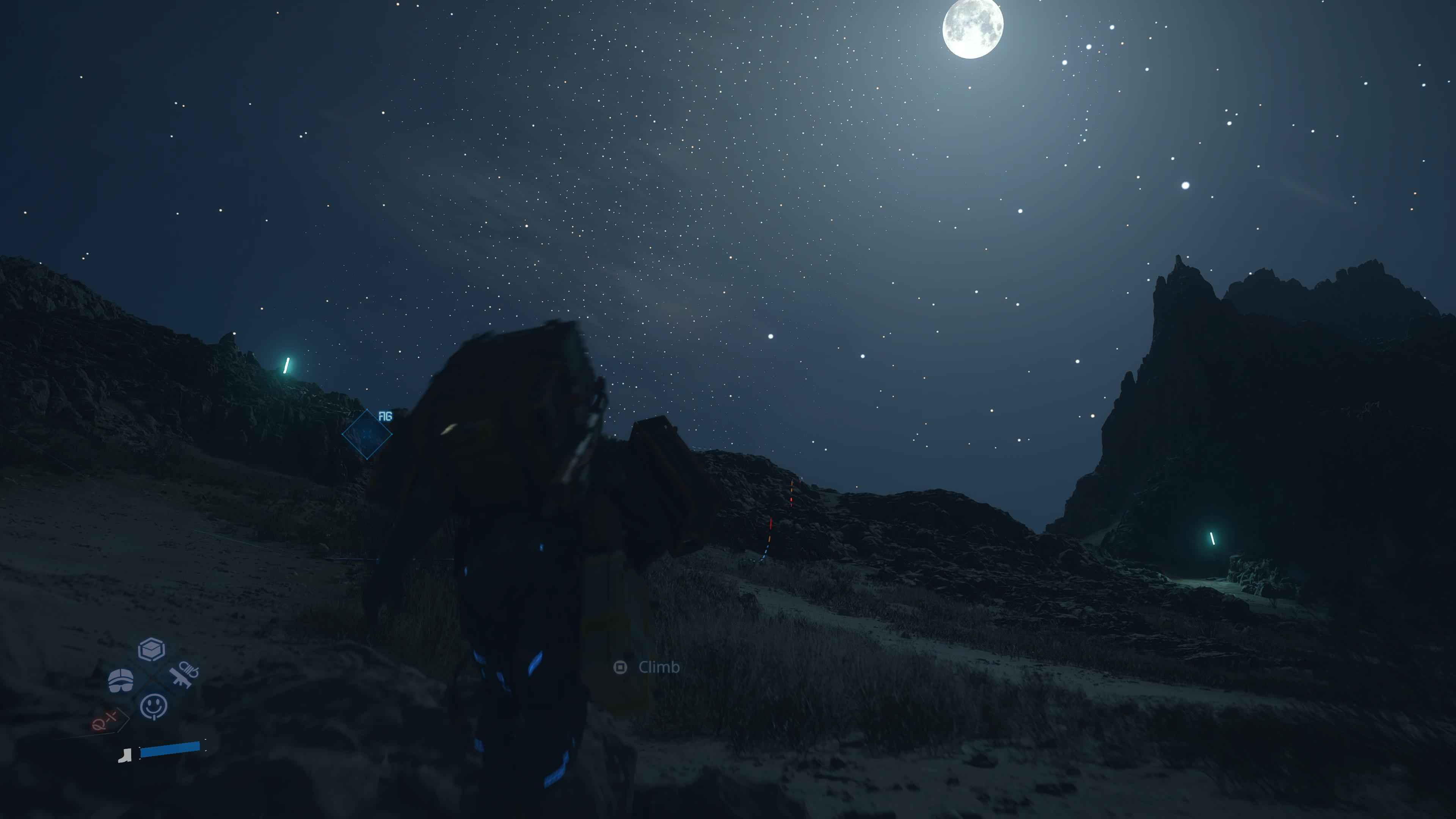
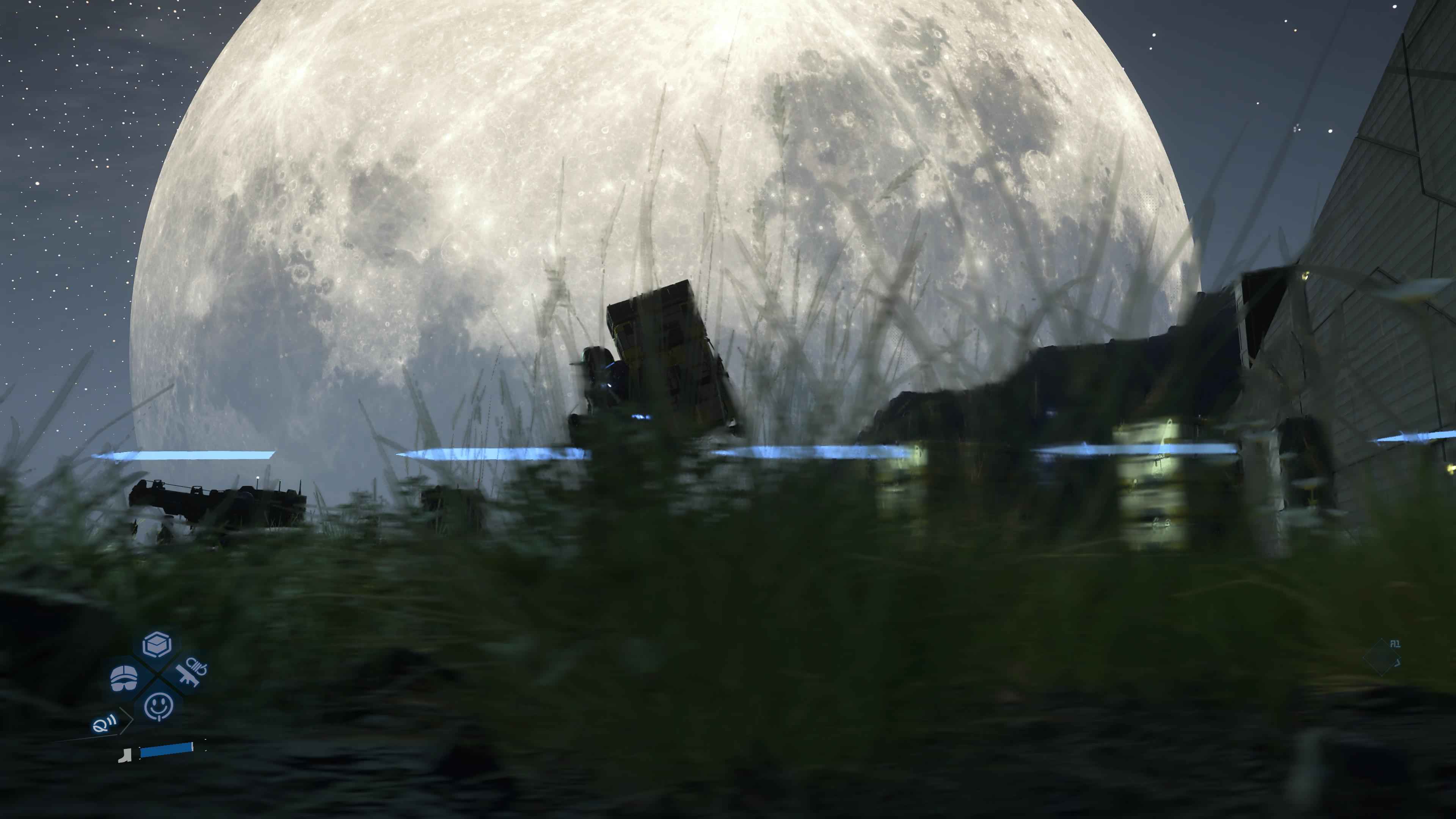
Some of my longer hikes were made that much more bearable when walking against the backdrop of a star-dusted sky, and a full moon sat on the horizon. This extends to the dynamic weather system that underpins the world as well. Sandstorms, avalanches, and even bush fires present engaging roadblocks while also being visually stunning. The detailed ways the rocks fall from cliff faces during regular earthquakes genuinely feel choreographed in how everything rolls off each other.
The addition of being able to listen to an in-game music player is also instrumental to making the brilliant vistas stand out even more. Like the general improvement to gameplay, this inclusion is a small one that shows that this world has gotten less hostile.
Have We Walked This Road?
The main story of Death Stranding 2 is one that very finely threads the needle between familiar and flipping the deck wherever it possibly can; all of the component parts from the original Death Stranding are here, but are used in new and exciting ways.
Death Stranding 2 expects you to be fluent in the way that the world works; for a sequel to a game with well-established rules and nuance, no time is spent reacquainting a player with what a “BT” is. Or what on earth all the babies are about. You are expected to get it from the word go, which I admire.
Why should a clearly marketed sequel bend to people who haven’t spent the time catching up? A handy recap feature in the main menu is a good refresher course, but doesn’t substitute for playing the original. Putting it bluntly, do not play this game if you have not played Death Stranding.
Generously, the “Corpus” functions as a constantly updating glossary that exhaustively catalogues every small detail you come across. If there’s a term that you’ve forgotten, you can open the Corpus at any time and actually read a canonical excerpt on what it is. This feature was great and was just downright fun to explore.
Most of the star-studded cast from the previous game end up returning in one way or another, and all of them still embody the eccentric characters that they had done previously. Lea Seydoux as Fragile takes a far more active role in the narrative and I was pleased that she was given more to do. To be honest, this is true of everyone in Death Stranding 2. Everyone is given far more space to actually breathe as their characters, outside of just extended dialogue.
Newer additions to the cast slot into the rogue’s gallery smoothly. Rainy is a breath of fresh air and an endlessly positive presence around the DHV Magellan, with some particularly interesting input. Other additions include Dollman, Tarman and Tomorrow, all of which are fun to watch and interact with over the course of the game. Each character has a role to play, and I would be hard pressed to pick a favourite. Having Dollman as a wingman throughout the longer treks provides a small but subtle nudge in the right direction.
It’s nice to have another person along for the ride, and he never felt like the quippy little distraction that I feared he would be. His commentary is insightful, encouraging and pleasant.
Troy Baker’s return as Higgs is especially fantastic; he embodies a delightfully evil persona that feels so abstract from the grounded world that I couldn’t help but laugh whenever he spoke. Norman Reedus is equally great, with a subdued but equally emotive performance when the time calls. Death Stranding 2 gives Sam far more of an emotional core, and Reedus manages to draw that out of a character who is pretty quiet compared to the likes of Snake and Raiden.
The choice to have a far greater emphasis on the personal connection between characters means that each is given a far greater number of small moments that actually round them out. You get to see these characters actually having fun with their communal space in the DHV Magellan, and I loved coming back to the base to restock for the next order. That kind of cohesion was something I felt was missing from the first game.
Bringing It All Together

Hideo Kojima has stated openly that the plot of Death Stranding 2: On The Beach was explicitly rewritten following the global disruption of the COVID-19 pandemic. That’s no secret, and I feel like it’s essential grounding for the issues that Death Stranding 2 chooses to explore instead.
Instead of hammering home the point of connection and doubling down on what he had to say in 2019, Kojima’s direction for Death Stranding 2 is wholly singular and one that stands in direct conversation with his work that came beforehand. It’s ambitious, it’s bold, and it’s undeniably “Kojima.”
Having beaten the main story and seen it through to the end, I can safely say that this game will be discussed in the same way that the first game was, but for almost totally isolated reasons; every aspect of Death Stranding 2: On The Beach exists to serve the greater interrogation of our world as we know it.
Every small detail of Death Stranding 2 has been finely crafted as a small part of a greater tapestry that aims to tell a sweeping story about the reality of human connection, beyond just the idea of connection itself. The importance of moving on and looking to the future, and not being obsessed with the past. What does it mean to belong?
I said it above, but Death Stranding 2 spins a lot of plates and manages to pretty well tie them all together into an experience that feels truly eye-opening in a myriad of ways. In some ways, it feels like Death Stranding 2 is a game that could only exist in the here and now; it challenges our expectations and asks us to look within ourselves and examine our relationships with those around us.
It pains me to not be able to talk about some of the awesome surprises hidden in the latter portions of the game, and the beautiful scenes that I’ve witnessed. But take me on my word when I say that this is truly something special.
As always, Hideo Kojima’s games are not games filled with meaningless fluff. Every minute is important in the overall experience. The time you spend in a quiet routine, puzzling your way through the environment, is time that the game acknowledges.
More than anything, Death Stranding 2: On The Beach is an enraged scream in interactive form. It’s a call to arms for a better world, one that remembers where the human experience comes from, building on what Kojima had to say way back in 2019.
You just need to be prepared to put the time in to see that come to the surface. Like any good game, you are more than rewarded for the journey. And if you’re coming for a second trip with Sam Porter Bridges, I know you can stick with it.
Death Stranding 2: On The Beach is due out on June 26, 2025 for PS5.
Review code kindly provided by publisher.